We are living in an era where it is said, “No record in the world is a secret; one just cannot say when it will be exposed.” Yet, the shady dealings of people haven’t decreased; if anything, they are on the rise. We are in a time where powerful nations are spying on every individual on the planet. No matter how many details emerge about this, people aren’t waking up, and the spying isn’t stopping. Instead, it is intensifying.
What happened after Edward Snowden drew the world’s attention to the spying of America’s NSA, which kept an eye on its own citizens and people across many nations, including India? It was expected that the roar of American surveillance might subside as a result of Snowden’s operation. However, America is now scouring everyone’s homes and minds even more than before, using AI, IoT (Internet of Things) technology services, and more tech companies. Meanwhile, Snowden lives in exile in Russia.
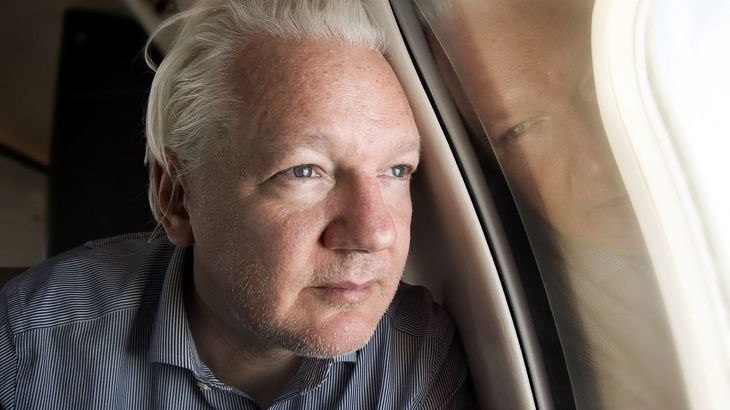
You remember Julian Assange “leaking” thousands of secret cables regarding America’s covert strategic activities on the ‘WikiLeaks’ platform in 2010, don’t you? That same Assange, in 2024, pleaded guilty, reached an agreement with the U.S. government, and walked out of a UK prison. Now, he is quietly spending time with his family in Australia. The “foul play” of the big powers continues as usual!
At one time, ‘Julian Assange’ had become a global brand name. ‘WikiLeaks’ was a household word worldwide. It was portrayed as a “revolutionary project” challenging the oppressive systems of governments, especially the U.S. government. Assange had shaken the entire world through a web service. The primary and declared objective of WikiLeaks was to “somehow” acquire/obtain secret documents and publish them on the internet for the whole world to see. By publishing millions of documents, Assange earned the enmity of various governments. There are reports that Edward Snowden also had ties to WikiLeaks. After all that clamor, WikiLeaks now lies dormant without any overt activity. In 2019 and 2021, it published some insignificant bits and fell silent. Today, it is no longer possible to search for major documents on the WikiLeaks website as before.
Julian Assange was born in Australia. At one stage of his life, he learned computer hacking. He even brushed against the criminal world. He held various jobs. Then, in 2006, he co-founded WikiLeaks with his friends. He styled himself as its “Editor-in-Chief and main spokesperson” and began publishing secret documents. In 2010, joining forces with Chelsea (Bradley Edward) Manning—a ‘trans’ person and U.S. Army intelligence analyst—he released thousands of American secret documents. Background information on the Afghan and Iraq wars, and secret American diplomatic cables, were exposed. Chelsea Manning had to face imprisonment, eventually receiving clemency through Barack Obama’s “grace” in 2017.
According to documents released by Edward Snowden in 2013, details of the spying conducted by the American intelligence agency ‘NSA’ against Germany were revealed. Later, it came to light that Germany’s own intelligence agency, ‘BND’, had joined hands with the NSA to spy against other European nations. About 2,500 secret documents released by Assange and WikiLeaks had put Germany in a tight spot.
Assange caused immense embarrassment and loss of face for America by claiming, “The ISIS jihadi terrorist organization is actually a creation of America.” Generally, it is well-known that “after 1979, it was America (CIA) that groomed Al-Qaeda militants to fight Soviet forces. Saudi Arabia provided the billions of dollars and other assistance needed for that. Due to the creation of terrorists, America itself later fell victim to the 9/11 attacks, which led to the Afghan war. That development led to the birth of ISIS terrorists.” This was Assange’s argument: that America is responsible for the birth of ISIS.
A worldwide debate raged over whether “the way Assange worked was right or wrong.” Public discourse branched into two factions: those arguing “it is right” and those saying “no, it’s wrong.” The argument in his favor was: “Politicians are ruining true democracy by keeping unnecessary secrets. They are deceiving the people. People should have all the information; Assange is merely doing that. Because of him, the democratic system will take on a new, transparent form in the future.” The opposing argument was equally strong: “Some Deep-State powers within America itself are working behind Assange. Through such selective leaks, many security secrets are being exposed. Is it possible to conduct diplomatic talks and business at the international level in the open? If secret government information comes out, relations between nations will be ruined, leading to unrest. What is Assange’s hidden motive? He is a new kind of terrorist of this era; the intention of the powers behind him is not good.”
It is difficult to fully decide which of these two arguments is right or wrong, true or false. In a democracy, it is right that governments should act transparently and honestly without maintaining excessive secrecy. Likewise, it is also right that all information cannot be transparent. During the WikiLeaks era, officials, politicians, and diplomats had to work with the constant suspicion of whether their secret correspondence and talks would truly remain secret. But what should be done when rulers develop a tendency to dishonestly hide information from the people under the pretext of maintaining secrecy? For rulers who follow the policy of “one thing on the outside, another on the inside,” WikiLeaks was indeed a nightmare. Regardless, whether Julian Assange and his associates were the only ones behind WikiLeaks, or whether there were “anonymous” big powers as some argued, has not been revealed to this day. Julian Assange, exhausted after a 14-year legal battle, walked out of a British jail in 2024—what kind of “settlement” he made is not yet known.
The same happened with those holding black money in tax havens. Details of a selected few were leaked in massive amounts under the names ‘Panama Papers’, ‘Paradise Papers’, and ‘Pandora Papers’. Now they are entangled in the complexities of laws and agreements. The details of the powers that caused these papers to be leaked are not “directly” known. Their intent is even harder to discern. Similarly, there is no answer to the question: what if Julian Assange or ‘transparency advocates’ like him are themselves dishonest? What if those working like WikiLeaks publish only certain documents they want and hide the rest, using them to blackmail whoever they want and play games as they please? What if they work for some powers and against others? These questions are also very important. Such possibilities cannot be ignored. On one hand, it feels natural that “all kinds of transparency are good.” On the other, one must also think about the dimension: “Could someone have played a political game in the name of transparency?”
It is noteworthy that many of America’s global misdeeds have been exposed through various ‘transparency’ activists. Though the pro-Pakistan stance held by the U.S. government and the CIA during the India-Pakistan wars was no secret, it was these transparency activists who revealed the secret cables and letters showing its true, gargantuan internal form. Sometimes, governments themselves may officially release secret documents. In 2005, it came to light through old secret records released by the U.S. State Department itself that during the 1971 India-Pakistan war, President Richard Nixon and Henry Kissinger had used obscene language (calling them “bastards” and “bitch”) to insult Indians and Indira Gandhi. Perhaps the secret games played by Donald Trump in favor of Pakistan, and the true nature of Bitcoin-related shady dealings happening in Pakistan, might be revealed in the future.
Coming back to Julian Assange, the argument from Germany (and America) was: “He doesn’t have a true obsession with transparency; he is a man working at the instigation of Russia and in favor of Russian interests. This is evident from the ‘selective’ documents he leaks.” Following the ‘deal’ Assange made with the U.S. Justice Department, he is now living comfortably in his home in Australia.
Author