Driven by rogue elements and religious fanaticism, Pakistan’s internal mindset has become thoroughly corrupted. Its agenda is not limited to Jammu and Kashmir; rather, it targets “Ghazwa-e-Hind” (the complete Islamization of India). If that weren’t the case, there would be no reason for it to sponsor terrorism in other Indian states. People are being brainwashed with the rhetoric that “the Islamization of India is your religious duty.” The notion that “Ghazwa-e-Hind is a feasible project and can be achieved” is being systematically sowed. There are numerous historical examples where organizations like ISIS, Al-Qaeda, Hamas, and the Muslim Brotherhood, alongside countries like Qatar, Pakistan, Saudi Arabia, Turkey, and even Iran—forces consumed by the obsession with global Islamization—have operated on behalf of or at the behest of the American CIA.
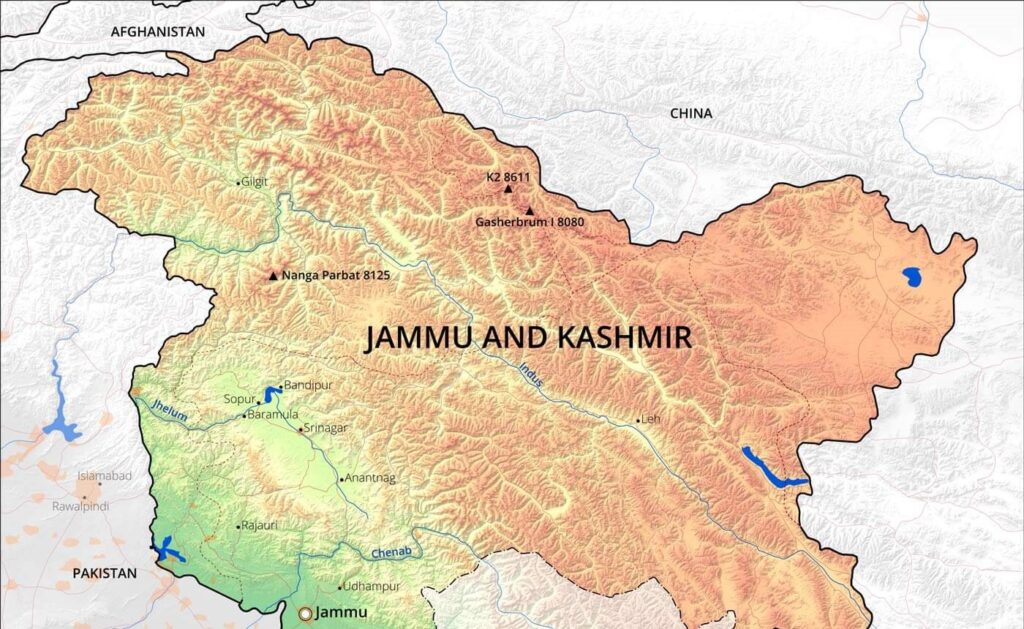
The old Article 370 of the Indian Constitution served as a tool that aided the games of these global powers. Its relegation to the trash heap of history dealt a massive blow to their designs. Now that the old Article 370 is gone, the entire Constitution applies to all territories of India, including Pakistan-Occupied Kashmir (PoK). India can now “constitutionally” demand the return of these occupied territories. Since there is no provision in the Constitution, the Government of India cannot enter into compromises or negotiations with foreign nations regarding its official territory. Our Constitution simply does not permit such compromises. According to the Constitution, it is the government’s responsibility to protect and retain all territories of India; no government (including any future governments) has the authority to cede them to other nations. While the Constitution allows for the expansion of the country’s borders, it grants no power to any government to shrink borders or hand over portions of its land to foreign countries. A government that has taken an oath to “uphold the sovereignty and integrity of India” cannot sit down to negotiate on India’s territorial integrity.
This implies that, moving forward, there is absolutely no need to hold any talks with Pakistan regarding India’s borders.
The regions of Jammu, Kashmir, and Ladakh, where the entire Indian Constitution now applies, will continue to be official and integral parts of India. The government bears the official responsibility to defend them, even if it requires war. All past doubts, confusion, and anxieties that existed (back when the old Article 370 was in force) have been completely erased. Since it has been clarified that past agreements cannot influence new amendments, even pre-1949 treaties recognized under Article 363 of the Constitution no longer hold any sway. In other words, negotiations compromising on the fact that “Jammu and Kashmir is an integral part of India” cannot be conducted under the guise of past accords with the Maharaja, the Simla Agreement with Pakistan, the Lahore Declaration, or the Agra Accord. According to the Constitution, talks to determine whom this territory belongs to are strictly out of the question. Consequently, India’s Jammu and Kashmir region is no longer a matter of “bilateral” discussion with any country. When it is not even a bilateral issue, where is the scope for mediation by the United States or any other third party? This is precisely the bitter pill that rogue forces find impossible to swallow or digest.
Author