We are currently living in a period marked by intense global turbulence and geopolitical tension. This is a unique time in the 21st century, characterized by rapid shifts in global politics and the rising specter of conflict on a scale not seen since the 1940s. The rate of change is astonishing—events that once took a decade to unfold now happen in a matter of months or even weeks. The complexity of geopolitics has reached new levels, with global power dynamics shifting so quickly that it is nearly impossible to predict what the world will look like by 2030.
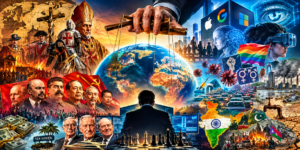
One of the most alarming developments is the threat posed by militant Islamic groups, who are increasingly focused on expanding their influence across Europe, the Americas, and Asia. As part of a broader missionary agenda, these groups are targeting the “unreached” communities of India and Asia for conversion. This is accompanied by the rise of illicit networks—drug cartels, cryptojacking operations, and terror organizations—driven by shadowy and untraceable financial interests. This complex web of forces, spanning across continents, is leading us into an era of unprecedented instability.
Capitalism vs. Communism: The Struggle for Global Control
At the core of this global upheaval lies the conflict between capitalism and communism—two systems that, despite their apparent ideological differences, often function in remarkably similar ways when it comes to individual freedom. Under both systems, individuals find themselves as mere pawns—whether it is under the strict control of a communist regime or as subjects of corporate oligarchies under capitalism. Neither offers true autonomy or security for the masses.
As a result, a few corporations and billionaire elites now control vast amounts of wealth and data, far exceeding the resources of entire nations. These elites hold the power to influence global politics, economy, and social structures, shaping the future of the world according to their interests. The most troubling part is that these corporations and wealthy individuals are not just economic players; they are shaping political outcomes, and their influence extends far beyond national borders.
The COVID-19 pandemic briefly disrupted the global system, but the recovery has been uneven, and some of the most powerful countries, like India, have managed to emerge with increased influence. However, the focus has now shifted to what some are calling the “Digital Pandemic”—the rise of cryptocurrencies, the manipulation of data, and the potential financial collapse driven by decentralized networks. These developments are reshaping global financial systems, with growing concerns about the erosion of national sovereignty in favor of private, digital power structures.
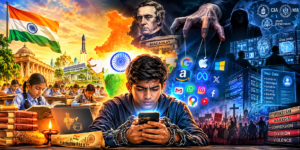
The battle over data has become the new geopolitical struggle. Countries and corporations are increasingly aware that whoever controls information controls the world. Tech giants like Google, Amazon, Apple, Meta (formerly Facebook), Microsoft, and Chinese firms are dominating the lives of billions. With their vast networks and data-collecting algorithms, these companies have created an unprecedented level of surveillance, enabling them to anticipate and control human behavior on a scale previously unimaginable.
Rise of AI and China’s Challenge to US Dominance
The rise of Artificial Intelligence (AI) has introduced a new era of technological warfare. China, in particular, is making strides to surpass the United States in the development of AI technologies, leveraging rare-earth minerals to secure its dominance in this critical area. The competition between the US and China is no longer just about military or economic power—it is about who controls the future of humanity’s digital and technological infrastructure.
AI is no longer just a tool—it is shaping the future of humanity itself. It is influencing politics, security, and personal lives in ways we are just beginning to understand. The question is no longer if AI will control us, but how it will happen. The implications of AI are vast, extending into realms as varied as defense, healthcare, entertainment, and human rights.
Great Reset: A New World Order
Amidst this technological and geopolitical chaos, the concept of a “Great Reset” is gaining traction. This is not just an economic or political reset—it is a reordering of global power structures, social norms, and technological systems. The World Economic Forum (WEF) and other global institutions have been pushing for this new paradigm, advocating for radical changes to the way the world operates.
This reset will likely be driven by the acceleration of digital and financial systems that will fundamentally alter economies, societies, and even the way we think about nation-states. The rise of global surveillance, digital currencies, and the increasing centralization of power in the hands of a few entities are all part of this new world order.
Political Turmoil in Pakistan and Other South Asian Countries
In the context of this shifting global order, countries like Pakistan are facing profound internal struggles. The looming threat of disintegration within Pakistan, fueled by political and military infighting, is now an urgent matter. The Taliban has gained considerable power in the country, further complicating the situation. Meanwhile, Pakistan’s nuclear weapons capability, once considered a potent deterrent, has lost much of its deterrence value after the success of the “Operation Sindoor” in neutralizing some of Pakistan’s key military assets.
Pakistan’s military and political establishment is now aligning itself with global powers, particularly the United States, in a bid to secure its place in this evolving world order. Tensions between Pakistan and India are also expected to escalate, with the possibility of destabilizing the region through proxy wars, economic sabotage, and ideological divisions.
Battle for Ideological Supremacy: Cultural and Political Wars
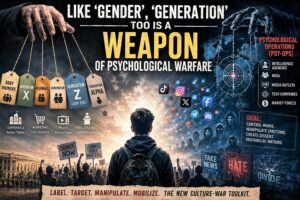
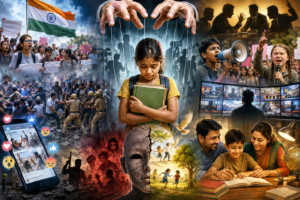
Meanwhile, across the world, the culture wars and identity politics are intensifying. The ideological battle lines are now being drawn between the “left” and “right,” with both sides increasingly polarized. This divide is being amplified by big-tech companies and their role in shaping the political discourse. Social media platforms, once hailed as democratizing forces, are now weaponized in political struggles, fueling division and hostility.
This clash is not only about ideology but also about control of the future—who defines what is acceptable thought, what is truth, and what is justice. In the United States, figures like Donald Trump have become symbols of resistance to the rising influence of woke ideologies in both politics and culture. The battle between the traditional power structures and the new wave of progressive politics is reshaping the global political landscape, and it’s likely to become even more contentious in the coming years.
Geopolitical Uncertainty: The New World Disorder
The next few years will see further geopolitical instability, particularly in the West Asia and South Asia. Countries like Iran, North Korea, Russia, and Israel will continue to be central players in global power struggles. The US, while trying to maintain its global leadership, faces significant challenges from rising powers like China and Russia, as well as the growing unpredictability of rogue states.
Global Financial and Social Chaos
The future, as outlined in this analysis, seems poised for significant disruption. The global financial system is teetering on the brink of a crisis, exacerbated by digital currencies, debt crises, and the consolidation of wealth by an increasingly small group of elites. Social systems, too, are being tested by mass migrations, climate change, and the collapse of old power structures.
The question we must ask is: What will this new world order look like? Will it be a digital utopia ruled by a few powerful corporations and states? Or will it lead to an even greater breakdown of global order, with national borders becoming irrelevant and communities living in perpetual fear and uncertainty?
In summary, we are living in an age of intense geopolitical, technological, and ideological turbulence. The forces shaping the future of our world are not only unprecedented in their scope but also in their potential for both great innovation and unprecedented chaos. As we move into the next decade, one thing is certain: the world is changing, and it will not look like anything we have known before.
Author