“There are castes in society; injustice and discrimination have occurred in the name of castes; therefore, opportunities must be given to the castes that suffered injustice”—it is difficult to call this stance wrong. However, as the method of viewing castes as the primary units of society—instead of individuals—has grown, it is an undeniable truth that only the influential forces within those castes have reaped the benefits.
What if the criteria had been to observe an individual’s poverty, social backwardness, deprivation of opportunity, and weakness at a personal level rather than a communal one? It would have been possible to separate the powerful within all castes, identify the truly weak, and provide them with opportunities. The central government, which has officially decided to conduct a caste census, might claim, “This is exactly what we are setting out to do now.” But history has not proven that this can be achieved through the census and classification of castes. Because of the notion that everyone within a single caste is equal, opportunities become elusive for the truly weak. It is more useful to view the individual (or the family) as the fundamental unit of society instead of the caste.
Today, the practice of not seeing individuals merely as individuals, and not considering citizens merely as citizens but as specific communities, has become extreme. We see ‘people’s representatives’ flying about like ‘caste representatives’ after winning votes from everyone. Even ‘spiritual men,’ who ought to transcend worldly dimensions, are increasingly roaring as caste activists. In an era where the dangers of “Artificial Intelligence” are becoming visible, embracing ‘Woke’ ideas is being called a ‘smart move.’ We are in a state where we go house to house asking people, “What is your caste? What is your sub-caste? What is your sect? What is your sub-sect? Tell us, it’s okay.”
There is political consensus for the process of counting heads based on caste. Since the country gained independence, the central government itself had not officially conducted a caste census. By conducting it now, won’t the process of ‘perpetuating’ castes be completed? What is the fate of the dream to bring about a casteless state system? Is a casteless system never possible again?
Even as years roll by and new generations rise, proper thinking is not taking place among us. We are witnessing the triumph of arguments and disputes that damage the social integrity of the country. Despite being a country of a great civilization, it hasn’t been possible to form a public system free from the whirlpool of castes. Our “Democracy” (Janatantra) is changing and taking the form of “Castocracy” (Jatitantra). Even those who consider themselves well-wishers of India’s unity and integrity are getting trapped in the whirlpool of caste politics, either under pressure or rendered helpless by failing to confront specific ideologies like ‘Wokism.’ The NDA government seems to feel that the caste census they conduct is smarter than the one other parties would conduct. Everyone has agreed that “let the census happen first.” A consensus has emerged among all parties to formulate policies based on castes and for caste politics.
Globally, the shadow of Wokism is spreading deeply within most political parties and public institutions. In the West, too, efforts to establish ‘Castocracy’ instead of ‘Democracy’ are in full swing. As the processes of perpetuating castes and racial perspectives gain universal acceptance, a time is coming where it seems impossible to form ‘casteless’ public systems henceforth.
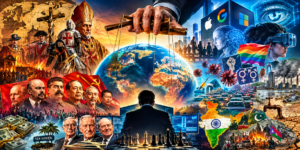
Globally, left-extremist ‘Wokism’ is growing strongly. In the name of the ‘Great Reset,’ an urgency to overturn the entire global system and create ‘something else’ is evident. Digital colonialism is growing. ‘Data collection’ is happening in various ways—directly, indirectly, and through theft. There are allegations that global powers are waiting to get precise data on all the castes and sub-castes of India. It is difficult to imagine what kind of games foreign powers, who are already creating various battlefields through the mischief of ‘Social Engineering,’ might play if they get precise data.
There are allegations that “thinking” is happening in some countries to deliberately erase jobs, develop a machine-based economy, make everyone sit idle by giving a small allowance in the name of “Universal Common Income,” and bring the population to an extremely low level by encouraging most people not to have children (creating such a necessity) and utilizing pandemics. All of this can be dismissed as ‘conspiracy theory.’ However, it is noteworthy that those making these allegations are not ordinary people. Many influential people—internationally famous leaders, giants in the field of technology, Nobel laureates—are worried about the ‘Great Reset’ and the inner intentions of ‘AI.’ On one hand, we are increasing dependence on machines, and on the other, at a critical juncture where human utility is being reduced, we are being ‘officially’ broken internally. Counting heads one by one, separating a few people of the same caste and same sub-caste, labeling them ‘now you are a class, only you are one, the others are different,’ and then officially facilitating a fight between those ‘classes’—this is the great social achievement of the present. The current situation is like innocent people fighting for honey while a flood that will submerge the forest itself is coming.
Real discussions suitable for this era are not taking place. We are fighting with divisive identities like minorities, majorities, caste representation, and communal representation from 80 years ago, the time of India’s partition. On the other side, ‘Deep-state’ powers are committed to bringing the world to a dire state. The ‘World Economic Forum’ and organizations of such background are floating ‘New World Order’ thoughts. Even after the time comes to give a small allowance (alms) to all people, should we sit like the innocents who were fighting for honey, or should we move forward to unite the entire power of the country’s citizens to grow to a level of competing with powerful global forces?
The imagination of what kind of shifts and tremors technology like “Artificial Intelligence” can create in the economic, social, and political spheres is not entering most people’s heads. An illusion has taken hold, preventing the recognition of the growing new digital colonial system. The current digital colonial powers are becoming so strong that they seem a thousand times more dangerous than the previous colonial powers. Large companies (and invisible powers through those companies) have grown to the level of controlling the world and are still growing. Whether robots will destroy humans or not is unknown. But even before that, it wouldn’t be surprising if people caught in the whirlpool of various ideologies and the political labyrinth of castes and creeds diminish and destroy themselves. The ancient history of the Yadavas of Dwaraka destroying themselves by fighting each other has not opened our eyes.
How can we prevent ‘precise data’ of the caste census from falling into the hands of invisible powers? Global powers, who are playing with India using data from 1931, might do much more once they get fresh data. The problems created within India by the colonial waves of previous centuries are not few. It can be observed that every wave of colonialism has troubled India in various ways. Efforts to create internal cracks within India reached their peak in the 19th century itself. Current digital colonial powers may create new chasms and new internal problems with the help of new technology. The situation where one country desires the people of another country to destroy themselves by fighting each other is as old as humanity. It is known to all that powers within countries like America, Europe, China, and Pakistan are working to create internal cracks in India and to further increase existing cracks. To face and win against this, India must become internally strong. But what are we setting out to do?
Doesn’t our Constitution begin with “We the people of India…”? Instead of that, is there anything like “We the castes of India”? The fundamental principle of the Constitution is that all Indians, without saying “castes,” consider themselves “people,” “the people of India.” This contains a collective consciousness, a consciousness of unity and integrity. There is no shadow of separation or segregation; there is a single voice of unity. People considering themselves ‘people’ is true democracy. Not considering themselves ‘castes.’ Instead of saying ‘We the Indian people,’ if thinking arises like—”We are separate castes, mine is this caste, theirs is that caste, mine is this creed, theirs is that creed, ours is a unique group, there is a distance between us and other groups… we are not getting enough privilege or representation, we will certainly get our rights”—then that is not democracy, not people’s power; it has to be called ‘Castocracy’ (Jatitantra). The concept of a Castocracy created by castes, for castes, and of castes is not in the ‘Preamble’ of the original Constitution of the Indian Republic.
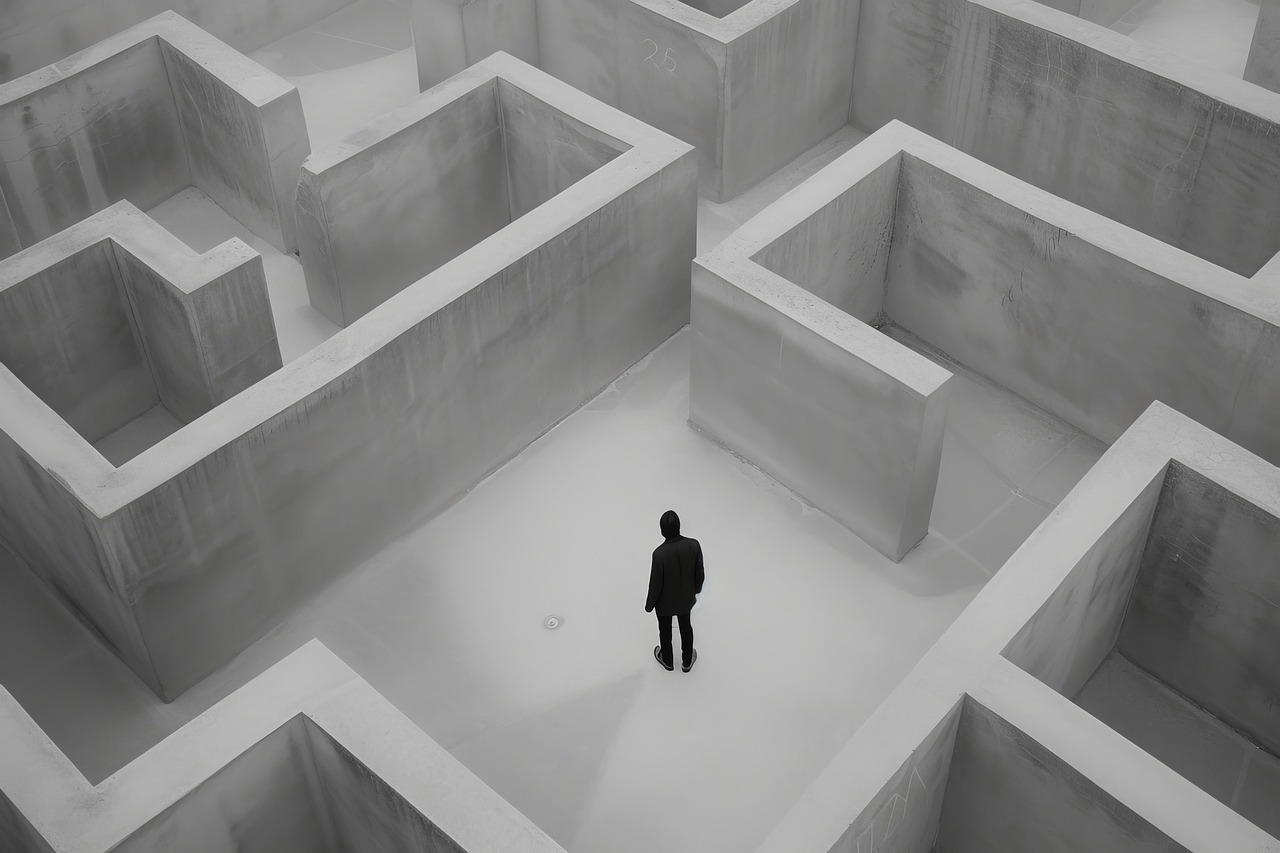
It’s not that caste discrimination and caste politics didn’t exist during the time of the Constitution’s drafting. Precisely because all of that was excessive, forming a ‘caste-neutral’ (not ‘secularism’; that is different) public system was the inner feeling of many political leaders and representatives of that time. Generally, all the great leaders of that time spoke on ‘caste-neutral’ grounds. An ideal was before their eyes that ‘one day the struggle for separate identities of castes must perish.’ ‘Annihilation of Caste’ was Ambedkar’s call, not the ‘perpetuation’ of castes. But, as time passed, the original principle began to weaken. All the disputes and conspiracies that had previously moved away for lack of opportunity gradually found new ways and inner paths and began to rush in. Gradually, our “Democracy” began to change, and the shadow of “Castocracy” began to triumph. A system began to strengthen where all administrative matters are viewed only through the eyes of caste and described only with the mouth of caste. Classification of castes in the name of classes happened repeatedly. Even the courts agreed and cooperated. After all this, can castes disappear without remaining permanently in the public system? India has long lost the rare opportunity to make castes, which somehow came into practice long ago, unrecognized at least in public life. In the struggle between ‘Democracy’ and ‘Castocracy,’ Castocracy has been chosen. Anyone can easily enter the labyrinth (Chakravyuha) of Castocracy. But it is difficult to come out of it. In the global competition of caste politics, Wokism is now flashing a smile of victory.
The greatest tragedy of this time is that there are no senior, great wise men who can speak wisdom to the country and the world and correct them.
Author