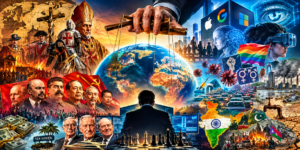
The complex geopolitical landscape involving India, Pakistan, and other global powers like America, China, and Russia is rapidly evolving. It presents a strategic web of maneuvers and counter-maneuvers, with direct consequences for regional security, and also influences broader global dynamics.
India’s Strategic Posture: Operation Sindhoor & Beyond
India’s response to external threats, particularly from Pakistan, has consistently been one of caution and military readiness. The declaration following Operation Sindhoor, asserting that any terrorist activity from Pakistan would be considered a direct military threat, was a clear message to the international community, especially to powers like America, China, and Pakistan itself. However, despite this aggressive stance, Pakistan’s terrorist outfits, such as Jaish-e-Mohammed, have continued to carry out attacks on Indian soil, including the daring car bomb explosion in Delhi.
The key question that arises is: How did Pakistan continue to carry out these high-risk operations despite the aftermath of Operation Sindhoor? The sources suggest that behind Pakistan’s persistence is covert support from international players, notably America and China, and perhaps other powers with strategic interests in the region. This partnership between powers may not always be apparent but is suggested to play a significant role in maintaining Pakistan’s military and economic stability, despite India’s superior defense mechanisms.
Proxy Warfare and Global Tensions
America’s role in Pakistan’s military operations cannot be understated. Just as America has historically funded Pakistan’s nuclear program and military infrastructure, there is evidence of American covert support for Pakistan’s ISI (Inter-Services Intelligence) to maintain its proxy warfare against India. The CIA has long been suspected of providing indirect support, ensuring that Pakistan has the leeway to act without the full consequences of a direct confrontation with India.
Similarly, China’s involvement in this proxy conflict is equally significant. China, which has territorial ambitions in the Indian Ocean and South Asia, has had long-standing ties with Pakistan, particularly regarding its military and economic growth. This partnership creates a complex scenario where Pakistan acts as a proxy for China’s interests, challenging India’s strategic goals in the region.
In this context, India’s position becomes even more precarious. The situation resembles Ukraine’s proxy war, where America, Turkey, and others are deeply involved, yet the local populations bear the brunt of the military and political decisions made by larger powers. India risks being a proxy battleground for geopolitical rivals, particularly China and America. The key difference, however, lies in India’s ability to leverage its own strategic position to protect itself while minimizing external influence.
The Possibility of a “Ukraine-like” Situation for India
The comparison between India and Ukraine is striking. Both countries find themselves strategically important to global powers, but caught in the crossfire of larger geopolitical struggles. America has, at times, used India as a counterbalance to China, just as it has used Ukraine to challenge Russia. However, as the dynamics evolve, there’s an increasing possibility that India could be drawn into a proxy war, especially considering the rise of jihadi elements working within India, with ties to groups like ISIS, Al-Qaeda, and Pakistan’s ISI.
This situation raises the prospect that India could be manipulated into a position where it is forced to fight an asymmetric proxy war with its adversaries, much like the situation in Ukraine today, where local factions are essentially fighting a foreign-backed war.
Internal Conflicts: The Role of Pakistani Jihadism in India
Pakistani-backed jihadism remains a persistent and deadly challenge for India. The aim of certain terrorist groups is to incorporate Kashmir into Pakistan, with long-term aspirations of Islamizing all of India under the banner of “Ghazwa-e-Hind” (Islamic rule over India). This is not simply about territorial claims but also an ideological mission, one that is deeply rooted in Pakistan’s strategic policies and the agendas of global jihadi groups.
India’s Muslim population, while predominantly peaceful, is sometimes exploited by these extremist groups who promise Islamic unity and the Islamization of India. Many of these radicalized elements have ties to Pakistan’s ISI or the CIA, pushing forward the dangerous agenda of a global jihad that threatens the security of nations far beyond India’s borders.
The ultimate goal of these radical forces is clear: create a Pan-Islamic state that stretches from the Middle East to South Asia. While these ideas may sound far-fetched to the average observer, they have found traction with jihadi movements operating with support from Pakistan, China, Turkey, and other countries who see their strategic interests aligned with destabilizing India.
The Role of Global Powers in Proxy War
America, China, and Pakistan are not just players in a regional conflict but are deeply intertwined in a proxy battle over India’s strategic future. The ultimate goal of these global powers is not to conquer India but to weaken it through divide and conquer strategies. Pakistan, as a proxy for both America and China, plays a central role in furthering this agenda, using terrorist activities and proxy wars to create instability in India.
America, in particular, has been playing a dangerous game of manipulating religious and ethnic conflicts to serve its global goals. While it touts the cause of democracy and freedom, it is often guilty of using religious extremism as a tool to destabilize sovereign nations like India, to achieve strategic objectives in South Asia.
China, too, is playing a long-term game, aligning with Pakistan to counterbalance India’s growing power and influence. By supporting Pakistan’s nuclear ambitions and playing a hand in Pakistan’s military buildup, China seeks to undermine India’s regional dominance. However, India’s response has been to maintain diplomatic ties with global powers while also strengthening its military capability, ensuring that it remains an equal partner in any discussions about regional security.
India’s Strategic Path Forward: Unified Defense and Sovereignty
Given the multifaceted nature of India’s security challenges, India must take a multi-pronged approach to safeguard its sovereignty. This includes:
- Diplomatic Strengthening: Strengthening ties with like-minded countries, including America, Russia, and Japan, to form a unified front against China and Pakistan’s destabilizing activities.
- Strategic Military Readiness: Maintaining a state of military readiness and preparing for asymmetric warfare while also securing critical cybersecurity and intelligence networks to counter external influence.
- Internal Security Measures: Addressing radicalization within India through robust counter-terrorism strategies and community-based outreach programs aimed at curbing radical ideologies from taking root.
- Regional Alliances: Strengthening regional alliances and countering Pakistan’s destabilizing activities through proactive diplomatic and military actions, as well as cooperating with neighboring countries to ensure regional stability.
- Comprehensive National Strategy: Adopting a national security doctrine that integrates military, diplomatic, and economic strategies to effectively tackle the growing threats from both state and non-state actors.
The Game of Global Powers and India’s Strategic Future
The situation India faces is not just about defending its territorial integrity but about navigating a complex web of global power dynamics. Whether it is America’s geopolitical moves, China’s territorial ambitions, or Pakistan’s asymmetric warfare, India’s response must be well-coordinated, strategic, and multifaceted.
India’s security strategy must incorporate all dimensions — military, economic, diplomatic, and technological — to ensure that it can effectively confront these external and internal threats. The stakes are high, and India must continue to evolve its strategy to counter the growing influence of foreign powers while preserving its sovereignty and security in a rapidly changing global environment.
Author