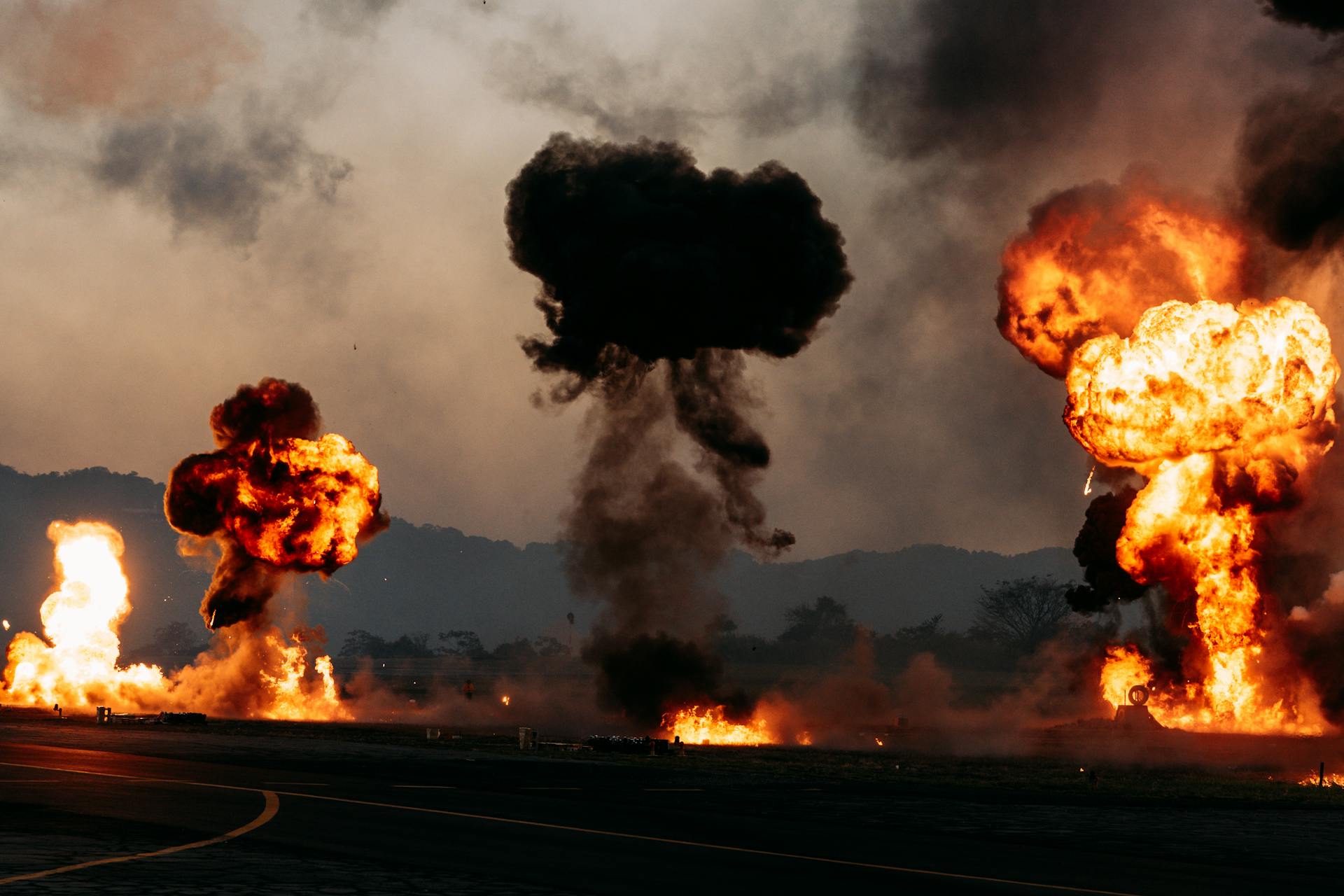
Regarding the America-Israel-Iran war, some expect that India and Indians must take ‘a’ stand. Similar ‘pressure’ arose at the start of the Russia-Ukraine war as well. Their opinion is that we must join one side (usually the side favored by the critics!) and condemn the other bloc: standing with Iran in the America-Iran war, or supporting Ukraine in the Russia-Ukraine conflict—and so on.
During the Ukraine situation, such pressure came intensely from prominent European figures and analysts. In one such instance, India’s External Affairs Minister Dr. S. Jaishankar caught everyone’s attention by criticizing the European habit of “portraying European problems as the problems of the entire world.”
In fact, it is noteworthy to look at the historical stance Iran, Taiwan, and Ukraine have held regarding India’s interests. Both Ukraine and Iran were administrations that consistently abetted anti-India activities. Iran was neutral only on a few occasions. Once, it cooperated by not voting in favor of a resolution taken by Islamic countries against India on the Kashmir issue. In subsequent days, not much trust was seen. In recent years, some ‘understanding’ developed between India and Iran, providing a strategic advantage to India regarding the management of the Chabahar port. However, there was no change in Iran’s hardline religious ideological stance. The administrations of Ukrainian leader Volodymyr Zelenskyy and Ayatollah Ali Khamenei have, in many ways, continued to play behind-the-scenes games against India.
India is the only country in the world that has an alliance or business relationship with all these countries—America, Israel, Iran, Russia, Ukraine, and China. India is the only country that can talk to all of them. India is the only country in the world that can maintain distance from all of them. No other country is like this.
That said, America is by no means a true friend of India. At no crucial moment have we received America’s hand of friendship. Instead, its covert plans to suppress India continue relentlessly to this day. Therefore, India has no need to always stand behind America.
In many difficult situations, Israel has truly helped India. However, its policy involves keeping an eye even on its own household. Mossad is a double-edged sword; it has the capability to cut both ways. Not all Israeli political parties or leaders hold the same feelings toward India. Thus, it can be trusted only ‘up to a certain point’ and cannot be followed blindly in all circumstances. At the international level, including Russia, there are no ‘true friends who can be trusted at all times and in all situations.’ Unless our country’s direct responsibility, direct interest, or direct morality is affected, interfering in others’ wars is foolish and dangerous.
Here, the perspective of ‘morality’ is different from the perspective of unnecessary ‘interference.’ It is not right to succumb to Donald Trump’s pressure and enter unnecessary wars on his behalf, nor is it right to push aside India’s current interests by arguing for those who are sharpening their swords against India. The Indian government has correctly identified this. It is maintaining its strategic autonomy.
The first thing to do in the strategic field is a full observation and minute scrutiny of the situation. Let us call this ‘Strategic Watching.’ Second is paying intense attention to the impact of any war on our interests, on global events, and the resulting consequences for us. Let us call this ‘Strategic Assessment.’ At this stage, we must think about our policy, our stance, the choices before us, and what kind of action or reaction the situation demands from us. Adopting all possible tricks and methods to protect ourselves internally is inevitable here. While doing all this, there must be clarity on whether our active involvement in any war is good, whether indirect advice and cooperation are better, whether we should strive for peace and mediation, or whether a policy of neutrality is best. Let us call such a clear stance a ‘Strategic Decision’ or a ‘Strategic Stand.’ While doing these, there is no need for unnecessary chatter or emotional reactions. One must be silent yet active. One must be on high alert and maintain intense surveillance. Appropriate positions must be taken. One should not speak unnecessarily. One should speak only where and as much as required. One should not babble every time a mic is held in front of the mouth. Let us call this ‘Strategic Silence.’ It is this full capacity and maturity that is called ‘Strategic Autonomy’ (Strategic Independence).
‘Strategic Autonomy’ is not ‘Non-Alignment.’ The Non-Alignment policy of the previous generation was a state where India played no significant role at the international level. In those times, India had no major international strategic role. No major world power would contact Indian leaders to seek advice or consult on stances regarding global developments. Indian leaders went abroad either to ask for loans or to receive free aid. Otherwise, it was a state of ‘the poor must stay as they are.’ Strategic Autonomy is not that. Strategic Autonomy is the full capacity to act as we deem ‘right’ and the ability to digest the consequences of our actions. To what extent India has achieved this now is a matter of debate. However, during the Ukraine, Iran, and other wars, it is visible that we have gained significant capacity.
‘Non-Alignment’ was a stance based on a kind of idealism, and to a large extent necessity, saying “We will not be the tail-piece of any superpower.” An ‘Autonomous Policy’ says: “We are nobody’s tail-piece. We ourselves are an independent power in the world. If it suits our interests, we will show partnership with other powers. If not, we are free to follow a policy of neutrality. We alone decide when and how our policy should be. We do not follow others’ instructions. We are autonomous enough not to bow to pressures to change our policy.”
Non-Alignment was a policy that asked, “Why do we need the company of the big guys? Let us be by ourselves in our place.” An autonomous policy is one that can show the courage to say, “We too are big. we are under no obligation to act according to you. We decide our own moves.” The first was a necessity; the second is a choice. Strategic Autonomy is possible only when the country’s internal strength increases and our role in external developments grows. This is not possible for all countries. India has changed now. It has emerged as a major international power. It is acting according to its awareness of its current status.
Observe this: India is the only country in the world that has an alliance or business relationship with all these countries—America, Israel, Iran, Russia, Ukraine, and China. India is the only country that can talk to all of them. India is the only country in the world that can maintain distance from all of them. No other country is like this. Those who have an alliance with Israel do not have good relations with Iran. Those who are on good terms with Iran are not trusted by Israel. Those who can talk to Ukraine cannot talk to Russia in the same way. In the current situation, India is the only country that has achieved balance with all of them. In this war, America, Iran, and Israel are all calling India.
However, to what extent an understanding is possible with which country depends on the level of mutual compatibility of our and their interests. One can try to mingle with all countries ‘up to an appropriate level.’ As circumstances and interests change, the rhythm of these relationships may change.
This is because, in international affairs, what is actually happening is purely ‘business.’ We can imagine anything on a grand scale from a moral standpoint and dream of many ideals. The real world is not like that. Here, there is no need to trust anyone as ‘friends’ or ‘enemies.’ Both friendship and enmity can change contextually. It is true that there is no ‘morality’ in such a stance. In reality, international affairs have never been conducted on the grounds of morality.
Modern India has realized this very late. It has moved away from an unnecessary ‘ideology-based’ foreign policy. Ancient India knew this well, as is evident in Chanakya’s writings. Protecting our country safely is more important than ‘ideology’ or ‘idealism’ at a global level.
Realizing this, many Arab and Islamic countries, keeping their contemporary interests in mind, are not on Iran’s side now but on Israel’s side! ‘Inevitably,’ Pakistan too, without going toward Iran, is appearing with the pro-Israel group with a heavy heart! Who would have expected this ten years ago?
I know what feeling currently resides in the minds of Indians. The desire in the hearts of most Indians is that somehow Iran’s story should be finished, and at this time, the Trump administration should also receive a few blows, and his/America’s arrogance should be broken! Officially, in this current war, India has no ‘necessity of interests’ to stand on anyone’s side. It is better to stay away when demonic forces fight each other.
That said, humanity cannot be forgotten. Whatever the strategic policy may be, there must be justice and dharma in everything. Especially, a religious and spiritual civilization like India is one that should show a moral model to other countries. The death and suffering of people are never justifiable. Violence against innocent citizens is not to be tolerated. It is a matter of sadness that there is no one now to condemn the bad games of Americans who drop bombs on everyone they see. The act of American forces bombing a girls’ school and killing hundreds of girls was a most loathsome, condemnable, and inhuman act. One cannot tell now whether the ‘United Nations’ is alive or dead.
A problem as terrifying as the problem of Iranian fundamentalism is the global tyranny and the war-cry of world dominance by America, especially by the ‘demon’ Trump.
Author