Following the severe terrorist attack by Pakistan on India in Pahalgam on April 22, 2025, a familiar deluge of “condemnations” flooded the airwaves. If mere words possessed actual strength, Pakistan would have been completely obliterated by now. Once again, declarations were made committing India to delivering a “fitting reply at an appropriate time.” This cycle has repeated for decades: condemnation, rhetorical lashing, and then a temporary period of uneasy “peace.” The perverse, malicious arrogance of the sinful nation of Pakistan continues unabated, and no one seems to know how to bring it to a permanent halt.
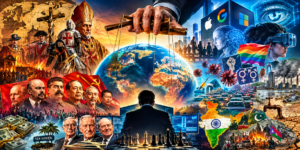
Let us examine the global and local matrix that existed at the time of this attack:
- Following the abrogation of Article 370, Jammu and Kashmir was gradually transitioning toward peace and order. Tourism was flourishing, transparent elections were successfully conducted with unprecedented public participation, and democratic processes were taking root. Local populations were achieving economic stability and learning the value of law and order, reinforcing the prospects of peaceful coexistence.
- China, while temporarily halting its direct confrontation against India in Ladakh, continued its behind-the-scenes machinations.
- In Bangladesh, a highly alarming situation engineered by the US Joe Biden administration, deep-state entities, and invisible Chinese forces culminated in a massive security threat for India. Following Donald Trump’s return to power, Bangladesh’s aging puppet leader, Muhammad Yunus, openly began leaning toward China. The massacre and atrocities against Hindus in Bangladesh continue unchecked. Yunus, backed by Pakistan and China, went so far as to talk about seizing the narrow land corridor (the Siliguri Corridor or ‘Chicken’s Neck’) that connects India’s northeastern states to the rest of the country, thereby isolating the region.
- Concurrently, the United States and Israel appear poised to declare war against Iran.
- The Taliban in Afghanistan continues its armed friction with Pakistan. In Balochistan, the atrocities committed by the Pakistani military have crossed all boundaries, leading to an open popular uprising.
- The strategic axis between China and Pakistan remains robust, and the ISI is deeply entrenching itself within Bangladesh.
- Tahawwur Rana, a key mastermind of the 26/11 attacks, has been extradited from the US and is in Indian custody. The unjustly ousted elected Prime Minister of Bangladesh, Sheikh Hasina, remains sheltered in India.
- Despite Chinese opposition, a strategic realignment is taking shape between India and Sri Lanka; a joint military exercise planned by Pakistan in Sri Lanka was canceled.
- In Pakistan-occupied Jammu and Kashmir (PoJK), anti-Pakistan and pro-India sentiments are surging, with locals increasingly expressing an open desire to reintegrate with India. Conversely, Pakistani Army Chief General Asim Munir has publicly resurrected the two-nation theory, talking about fracturing India once again.
- Internally within India, riots are being orchestrated against Waqf reforms. China has issued veiled security threats implying that countries entering into trade agreements with the US will face stability issues.
- US Vice President J.D. Vance visited India for high-level talks on an India-US trade pact, reiterating an offer to supply fifth-generation F-35 fighter jets to India.
- In Europe, particularly in the UK, the crisis of illegal Muslim immigration has amplified dramatically. UK Prime Minister Keir Starmer has intensified pro-migrant and anti-citizen stances, while Europe—especially the UK and France—vehemently opposes any direct American military operation against Iran.
- Meanwhile, Israel’s war against Hamas terrorists in Gaza, US engagements against Houthi rebels in Yemen, the Russia-Ukraine war, and global trade tariff wars all continue simultaneously. The deeply challenged deep-state entities in America are reportedly retreating to their old European bases to operate covertly.
- A top leader of Hamas held talks with Pakistan, while Prime Minister Modi embarked on an official state visit to Saudi Arabia.
This was the complex geopolitical landscape when Pakistan executed its barbaric attack on Hindu tourists in Pahalgam.
When connecting these dots, can a larger picture be discerned? Why did one of the Pakistani jihadist terrorists, after murdering Manjunath from Karnataka in Pahalgam, tell Manjunath’s wife, “Go and tell this to Modi”? Was he explicitly instructed to say this? What is the underlying context? This demands deep contemplation. What does “Tell Modi” signify? Is it a warning message, or an outright declaration of war? In reality, Pakistan launched a proxy war against India long ago. Whether we choose to acknowledge it or not, we are living in a state of war.
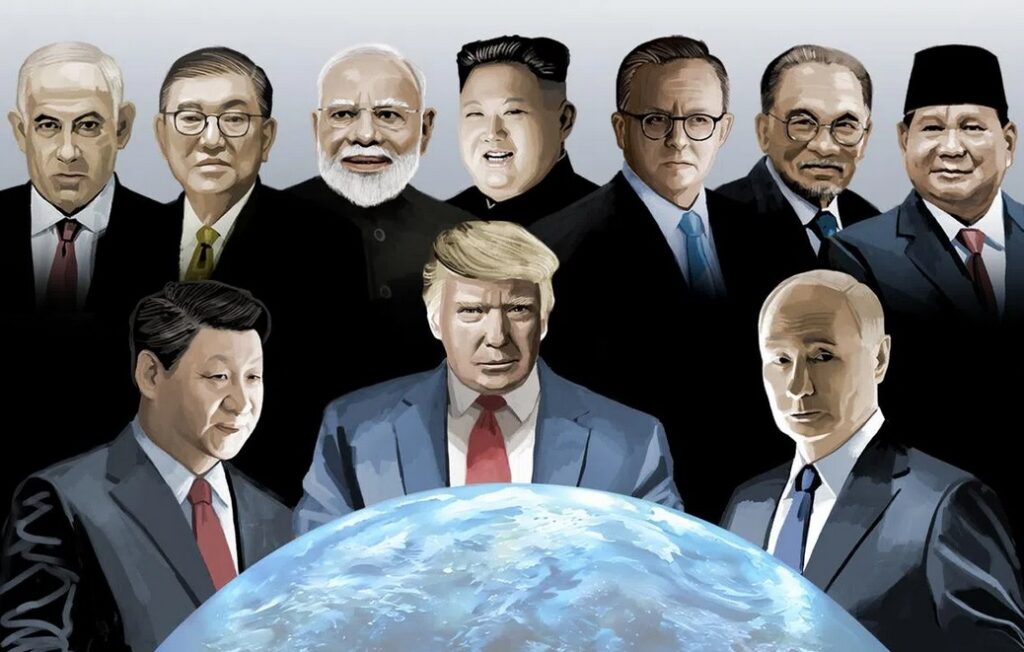
During his visit to Russia, Prime Minister Narendra Modi famously stated to President Vladimir Putin regarding the Ukraine conflict: “This is not an era of war.” He has repeated this sentiment globally, operating under the philosophy that this is an age of economic development, where nations must establish peace and order to focus entirely on financial growth. This is a noble, idealistic statement. However, looking at the aforementioned global realities, can anyone truly believe this is a time of peace?
Modi is not naive. Though he spoke those words with a specific diplomatic objective, he has gradually and inadvertently become bound by his own rhetoric. If you constantly proclaim, “This is not an era of war; I am a messenger of peace,” your own words tie your hands when a situation demands military action. A self-imposed paralysis can set in, inducing inactivity. In the past, Jawaharlal Nehru found himself ensnared in a similar self-created web. It is unwise for Modi to keep repeating such assertions now.
When Modi declares that “this is not an era of war,” the world smiles covertly. Had the United States been in India’s position, half of Bangladesh would have been under American control by now. Who decides what constitutes an era of war or peace? According to Chanakya’s statecraft, a ruler must always be prepared for war. Chanakya asserted that even if neighboring countries maintain friendly relations, they must inherently be viewed as natural adversaries. Peace is established either through war or the formidable threat of it—derived entirely from the victory achieved in battle. Why has a debilitating state of “Arjuna Vishada” (existential delusion and hesitation) sprouted repeatedly in this nation of the Kurukshetra, the Bhagavad Gita, and Chanakya’s bold legacy, reaching the heights of illusion?
There is no greater delusion than comforting ourselves with the phrase, “We have never attacked anyone first.” Ancient India was a land of valorous Kshatras that performed Rajasuya and Ashvamedha Yagnas. At times, one must launch a pre-emptive strike to dismantle the enemy. Otherwise, a nation reduces itself to the pathetic state of perpetually waiting to be attacked. Enemies strike when the scenario is advantageous to them, not when it is convenient for us. Permitting the enemy to dictate the timing and terms of engagement is terrible strategy. The autonomy to decide between peace and war must always remain firmly in our own hands. America understands this, and China understands this. It is India’s misfortune that it fails to grasp this basic tenet.
That being said, Narendra Modi cannot be termed a coward. His 25 years of public administration show no traces of corruption or cowardice. In certain matters, an excessively cautious, slow-moving approach has been visible. He may be employing a policy of deliberate delay because he is privy to complex, hidden obstacles unknown to the general public. However, when waiting becomes a habit, a policy of delay can manifest even where it is entirely unwarranted.
Meanwhile, indications suggest that the global forces instigating serial wars are actively trying to push India into a military conflict. Thus far, those designs have failed; an India-China war did not materialize, nor did an India-Bangladesh war. This latest provocation may be an attempt to trigger an India-Pakistan war. Alternatively, the calculation could be that if the US launches an operation against Iran, it would want to prevent an India-Pak conflict to secure energy corridors and regional cooperation, making this specific window the ideal time for Pakistan to strike India.
Should India surrender to inactivity under the pretext that “warmongering forces should not win” or that “the timing is incorrect”? How many asymmetric provocations must a nation endure? These are the heavy questions confronting Narendra Modi.
While certain clandestine global operations indicate that India is far from passive, the stark reality remains that Pakistan executed a brutal terror attack amidst an incredibly volatile global environment. This geopolitical climate and these persistent terrorist strikes deliver one unambiguous message to Narendra Modi: “This is an era of war.” The Prime Minister must stop repeating his previous refrain.
How our nation navigates these intricate situations, what type of wars it chooses to wage against various adversaries, and how it secures victory while managing internal and external readiness will be the ultimate trial of Modi’s strategic acumen. Whether he accepts it or not, global geopolitical currents and immediate national security challenges are steadily pushing India toward the battlefield.
(Published in early 2025)
Author