Since ancient times, we have had the saying “Travel the country, read the tomes”. Even in times before motor vehicles, people traveled to nearby hills, resorts, rivers, and distant pilgrimage sites. Travel has been a part of our culture since ancient times. Everyone had the desire or goal to go on a pilgrimage at least once in their lifetime. With the advent of railway services and motor vehicles, people gained a new freedom to travel. When airplanes became affordable, the world became smaller.
However, traveling aimlessly without a purpose is not what we call travel—it is mere wandering. Travel requires a clear objective and plan. The experiences gained from travel must be beneficial. If travel brings joy alongside moral, spiritual, and educational value, the saying “Travel the country, read the tomes” becomes meaningful.
The true essence of travel lies in the experiences of the country it provides, and how it teaches us ways of life. Among those who have traveled the most, one of the most renowned is Dr. S. L. Bhyrappa. I once asked him, “You’ve seen so many rare places. Surely you must have rare photos in your collection?” He responded, “No, I don’t take photos. I don’t even carry a camera. Everything is available on the internet, why should I take photos? If you spend your time taking photos, you cannot truly see or experience anything properly. What I seek is the entire experience of travel. That experience might manifest in some way in my works.”
These days, people even take selfies while having meals and share them on Facebook, Instagram, or WhatsApp. In this fast-paced age of display, we tend to give more importance to recording moments artificially. We forget to truly experience them. Nothing registers in our minds. We aren’t really “seeing” anything, nor are we experiencing things deeply enough for them to register. How many tourists today can sit for hours on a deserted beach, with no food, doing nothing? Who has the patience to sit from dawn till dusk on a mountain peak or by a river, simply watching nature? Writers like Shivaram Karanth, Kuvempu, Bhyrappa, and Tejaswi used to do this. Even in the early 20th century, before motor vehicles were as common, famous artist K. Venkatappa spent hours sitting in the rain in Ooty, immersing himself in the view. The water-color paintings he created then are still cherished today.
The “Social Media Travel” trend is what we see today. There is an increasing urge to capture every moment of travel in photos and videos. In every picture taken, the travelers must appear with a smile, showing themselves off, sharing every image and video to gain as many “likes” as possible! This obsession with likes drives people to hurry through their travels. If someone uploads photos of their “Great Himalayan Trip,” another person feels jealous! And if they haven’t had a new trip, they feel compelled to travel somewhere, take photos, and upload them to social media. Traveling just for the sake of showing off is not real travel—it’s a mere effort and toil. Such endeavors do not provide any meaningful experiences. One must reflect whether travel is for personal growth or for others. Just like how reading must serve one’s own benefit, travel too must first enrich us. Then, its indirect benefits can extend to others.
No matter where you go, the “smartphone” follows like a ghost. The sickness of looking only at the phone everywhere has increased. Modern travel writing no longer conveys deep experiences. If writers had truly experienced something, only then could they write about it. Details like which hotel we ate in, what room number we stayed in, and how easy it was to get a cup of coffee are all trivial information. These do not reflect the essence of the travel experience. Some people think that traveling to faraway places just to drink coffee and return content is the whole purpose of travel. More and more people are now seeing searching for coffee spots as the essence of travel. There are those who go on nature trips and return without even noticing a single flower or butterfly! What can such people share with others? They could have stayed home and saved both time and money.
The pilgrimages made by Shankaracharya illuminated all of India. The extraordinary travels of Charles Darwin gave the world a major scientific theory. These were serious journeys. In history, the writings of Huen Tsang have become immortal. If we don’t want to go that far back in time, we need not look at the age of Paul Brunton or Karanth, nor the time of Tejaswi. To understand how travel experiences can be better written about and how to make the most out of travel, one can read books by Paul Theroux or Bill Bryson. In Kannada, Purnachandra Tejaswi wrote outstandingly about nature travel. Today, the author Anuradha Goyal is coming to the forefront. V.S. Naipaul is regarded as one of the world’s best travel writers. However, his works are intellectual “study travels,” which may not be easily accessible to everyone.
Simply eating, enjoying, and sleeping do not constitute a “travel experience.” These things can be enjoyed at home too. Your journey must enrich your experience; you must truly see the world around you; the path you travel must engage your mind. New places, countries, people, lifestyles, cities, trees, mountains, rivers—they must be observed closely, and the life of those places must unfold before your eyes. You must connect with these changes and immerse yourself in them. You should speak with new people, engage with their homes, markets, temples, festivals, fairs, social events, arts, places of knowledge, and the allure of nature. All these experiences together provide a deep and meaningful travel experience.
From this perspective, “Cruise Tourism” doesn’t offer a fulfilling travel experience. The attraction of water, the vastness of the ocean, the grandeur of the ship, and the entertainment provided may bring temporary happiness, but eventually, boredom sets in. Most people may develop a sense of “just seeing the land” after such experiences. To alleviate this boredom, modern cruise ships provide all sorts of amusements and entertainment. Expensive tickets are sold, and people are made to believe that spending time on the ship is “an incredible experience.” That’s marketing! Such amusements might provide temporary happiness or intoxication, but they do not offer the full experience of travel—of exploring new places, of living with the people, and feeling the life around you.
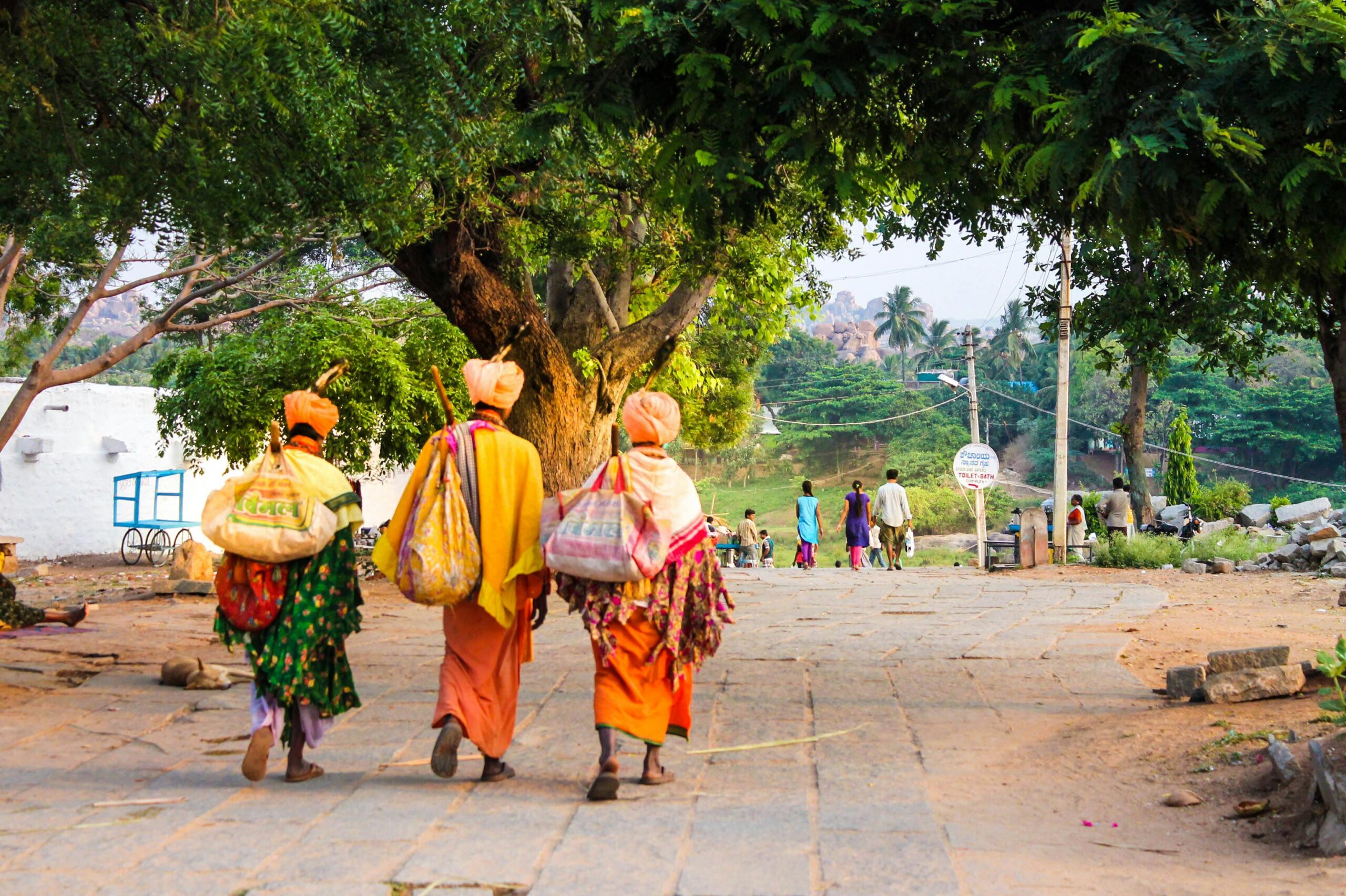
In that light, there is no better travel experience than a walking journey. Although it’s harder to travel to distant places nowadays, people today don’t even travel to nearby locations. The experience of walking to a hill or waterfall close to home, which was common among past generations, seems to have faded away. The environment is no longer as beautiful as it used to be. The natural beauty is being destroyed. N. D’Souza captured this transformation in his Kannada novel “Kunjalu Kaniveya Kempu Hoovu.”
Returning to the idea of walking, today, there is a growing belief that “walking is a humiliation, only for the poor.” People take taxis to the hotel porter, close the windows of their rooms, and stay inside, disconnected from the surroundings. They book a large car for sightseeing, then return to the hotel without engaging with the places they visit. They get in the car, rush through the sightseeing, and return to the hotel. Is this truly travel? Is this what travel experience means?
David Kunst, an individual, circumnavigated the world on foot and documented the journey. Not everyone needs to do that. Even if you go to a new place, you must walk around enough. You must walk well in new cities, and explore places off the regular “sightseeing” list. You must take long walks in nature, talk to locals, and if you are able and healthy, eat local food.
The next level of travel is cycling trips, and then long road trips in motor vehicles. However, with the advent of highways and expressways, it is no longer possible to travel through the heart of towns or experience the life of those places. Also, long road trips in buses or cars can be exhausting and frustrating. Therefore, traveling by train is more suitable for exploring distant places within our country. When people say, “It’s enough to reach the destination, the experience along the way doesn’t matter,” or when traveling to faraway places, air travel becomes a preferred mode. Here, the journey itself is not travel; the journey begins only after you get off the plane. That’s a noteworthy distinction.
Author