In September 2025, Dan Brown, the internationally acclaimed author known for The Da Vinci Code and his iconic protagonist, Professor Robert Langdon, returned with his much-anticipated novel, The Secret of Secrets. Brown has captivated readers for over two decades with his blend of historical intrigue, secret societies, and complex scientific and religious themes.
His signature storytelling style involves bringing controversial and unique historical or scientific subjects into the public eye through a gripping narrative—be it the secrets of Christianity, Papal controversies, Swiss banking, digital enigmas, CIA scandals, or the global network of secret societies. In this vein, his latest (eighth) novel, The Secret of Secrets, is creating waves just like The Da Vinci Code.
His works, translated into 57 languages, have sold over 25 million copies globally, with The Da Vinci Code continuing to be one of the best-selling books of all time.
While Brown’s previous works delved into hidden histories, cryptic codes, and Catholic conspiracies, The Secret of Secrets shifts focus toward a subject that has fascinated humanity for millennia: consciousness, the mind, and the mysteries of life after death. In this book, Brown explores the scientific and philosophical questions surrounding the nature of consciousness, incorporating elements of psychology, parapsychology, neuroscience, and the ever-compelling theme of life after death.
Set in the historical city of Prague, the story follows Professor Robert Langdon and his colleague, Dr. Katherine Solomon, a neuroscientist, as they unravel a deep mystery related to the nature of human consciousness. Dr. Solomon has written a book on human consciousness, and the novel’s plot revolves around the controversy and intrigue sparked by the upcoming publication of her work. As with all of Brown’s novels, The Secret of Secrets is full of suspenseful twists, historical puzzles, and thought-provoking philosophical questions.
The themes of life, consciousness, soul, and rebirth are not new to India. In Kannada literature, S.L. Bhyrappa has explored these in several novels like Nele, Sakshi, and Naayi Neralu. However, Dan Brown’s distinction lies in his fast-paced “scientific thriller” style, utilizing scientific research on brain function and Near-Death Experiences (NDEs) found in the works of famous figures like Raymond Moody, Dean Radin and Edgar Cayce (some of whom are mentioned in the book). He has a knack for taking ideas usually confined to academic circles and sparking public debate by piquing the curiosity of the common man.
Like all his novels, this too is a thrilling portrayal of events unfolding rapidly within a 24-hour window. The concepts advocated by the ‘Institute of Noetic Sciences’ come to life here. The novel raises several questions about “Consciousness” (the sense of existence) and offers answers that might seem “unique” to Western readers. I won’t reveal all the plot twists here, but I am reflecting a bit on the central theme. Since the core concept is clarified early in the novel, one can ponder it without giving away the suspense.
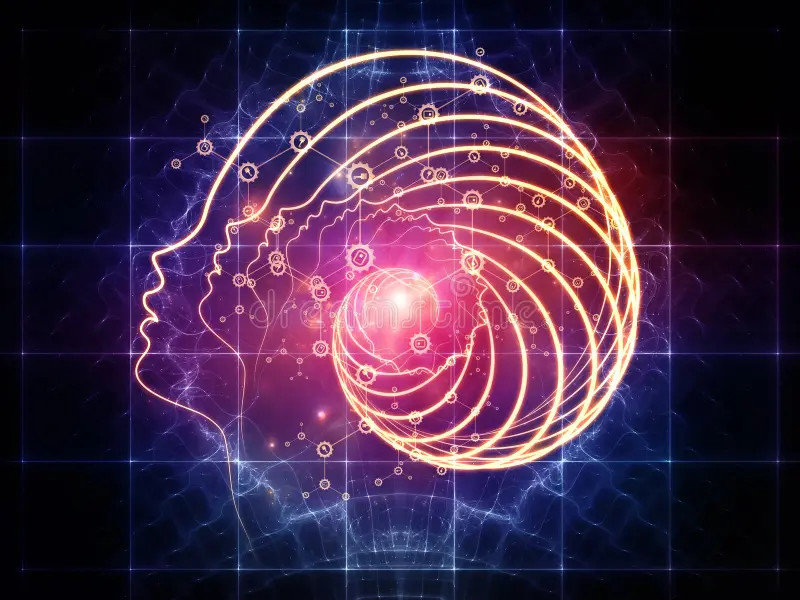
“The consciousness of ‘I am’—the awareness of existence—is eternal. As some scientists suggest, it is not a creation of the brain. This consciousness can exist beyond the brain and without a body. Just as a computer ‘syncs’ with today’s cloud storage, the brain is synced with an external universal consciousness. The brain is not the ‘generator’ of consciousness; rather, it is a ‘receiver.’ There is a consciousness that transcends the brain. At the highest level, there are no separate consciousnesses; there is only one Universal Consciousness (Advaita?). While our level of awareness—’local’—seems confined to the brain, consciousness is fundamentally ‘non-local’ in nature. Just as a radio receiver tuned to specific signals picks up pre-existing radio waves, our brain is merely a biological device that perceives signals coming through the primal consciousness. The brain perceives according to its capacity. When the brain is ill, it may perceive wrong or mixed signals (much like an old radio catching multiple stations at once!). Even if the receiver—the brain—is absent, the consciousness and the signals remain.”
This is the essence of the argument found in the novel. Dan Brown (through the character of Dr. Katherine Solomon) weaves together ideas gathered from Indian thought (Vedic, Buddhist, etc.), other religions, scientific research, and various ‘Noetic’ books into his own narrative. Some of the arguments Katherine makes have already been discussed extensively within the Indian tradition.
In modern times, no one has written more about “Truth Consciousness” and the “Supermind” than Sri Aurobindo. For Americans, the writings of Osho Rajneesh and the Dalai Lama have also provided significant food for thought. There are the writings of many ancient Indian mystics, as well as vast material in the Vedanta, the Gita, and the Puranas. Many great Western scientists (Heisenberg, Schrödinger, Oppenheimer, Tesla, etc.) have admitted that they gained many ideas through ancient Indian texts. Similarly, many modern Western thinkers have taken ideas from Indian sages and presented them as their own “original thoughts.”
Scholar Rajiv Malhotra and his co-authors have demonstrated how Ken Wilber, considered a famous scholar on the subject of consciousness, used ideas from Sri Aurobindo and other Indian sources while portraying them as his own research (for details, see: The Battle for Consciousness Theory by Rajiv Malhotra, Manojna Sastry, and Kundan Singh).
The Rig Veda, the world’s oldest source of religious and spiritual knowledge, contains vast information about God, higher beings (Devas), the soul, and consciousness. Regarding the mystery of creation, the ‘Nasadiya Sukta’ explains it in a way that surpasses all other concepts. The great sages who introduced the Vedic mantras engaged in complex thinking about true existence that has not been matched elsewhere to this day. There is also extensive discussion on the mind and consciousness in Buddhist and Jaina thought.
Everyone has an internal feeling of “I am,” right? Who is that “I”? Everyone experiences that even as the body ages, the sense of “I”—that feeling of existence—does not age. Long before “religions” were born, the first question people in our civilization asked themselves was “Who am I?”. The sages (spiritual scientists) gave a name to the original nature of this “I”: the Atman. Everyone has an ‘awareness’ of their existence; the sages called this ‘Prajna’ (Consciousness). The lesson taught by the sages is that if we use this power of consciousness correctly, we can understand existences that transcend this physical world.
Recently, some quantum scientists have suggested that when living beings die, there is a burst of life-energy, and even though the body is dead, that energy persists for a while. However, they haven’t said (or don’t know) whether that life-energy retains self-awareness, the “I” feeling, or memory. They suggest it gradually spreads and dissipates like light. According to the Indian tradition of knowledge: “Life-energy or the individual soul (Jivatma) possesses a subtle body (Sukshma Sharira) and a causal body (Karana Sharira) even without the gross physical body. Memory of identity remains in the Chitta (consciousness-mind). As long as it holds these, it exists in a subtle unit and is born again and again. That is ‘Reincarnation’.” Many people have experienced ‘memories’ of their past lives. Experts have attempted to study such incidents. Dr. Ian Stevenson of America conducted extensive research on memories of previous births and even visited India. Dr. Satwant Pasricha, a parapsychology expert at NIMHANS, Bangalore, has also studied this and written books and articles.
Most Western physicists do not accept the existence of the soul. They do not accept that “consciousness” can exist beyond the brain. Dan Brown’s novel challenges their stance. It is unclear how much of the complexity of Indian thought Dan Brown has truly digested. Since his usual method is to pick a major research topic and weave an entertaining thriller around it, it is unnecessary to expect everything from him. However, it is true that “Consciousness” and “Quantum Science” have become major subjects of study worldwide today.
The central mystery of the novel revolves around the age-old question: What happens to us after we die? This question, according to Brown, is not only the greatest enigma but also the one that defines the human experience. The concept of consciousness, in particular, is explored in the book in a unique way that ties in modern scientific discoveries with ancient spiritual beliefs.
In a world where science and spirituality often seem at odds, Dan Brown once again brings these two forces into a compelling conversation. While topics like consciousness, the afterlife, and reincarnation have long been discussed in philosophical and religious circles—particularly in Indian traditions—Brown’s approach adds a modern, scientific twist. Through the character of Dr. Katherine Solomon, he examines the concept of consciousness as something that exists beyond the physical brain, even suggesting that it might be a “non-local” phenomenon, not confined to the limitations of the brain and body.
This exploration of consciousness is not new to Indian philosophy, where it has been the subject of deep inquiry for centuries. The Upanishads, some Buddhist teachings, and Vedanta philosophy have long spoken of the eternal nature of consciousness (or Atman), the soul, and the idea of reincarnation. The question of “Who am I?”—the core of many Eastern spiritual teachings—is echoed in Brown’s work, particularly in Dr. Solomon’s ideas. Brown brings this age-old debate into the context of modern quantum physics, offering a thrilling narrative that blends these ancient philosophies with cutting-edge scientific research.
Dr. Solomon’s theories, much like the work of famous Indian thinkers such as Sri Aurobindo and contemporary spiritual teachers like Osho and the Dalai Lama, delve into the question of whether consciousness can exist outside of the brain and body. In the novel, she suggests that the mind may be more akin to a “receiver” of consciousness rather than its “generator.” This idea aligns with the work of many physicists, including the famous \physicist Sir Roger Penrose, who, along with Indian thinkers, has explored the concept of quantum consciousness—the idea that consciousness is not just a product of the brain but a universal phenomenon that transcends individual bodily existence.
What Brown’s latest thriller does, in his usual fast-paced style, is bring the issue of consciousness, the afterlife, and even near-death experiences (NDEs) into the realm of popular fiction. By weaving together historical intrigue with the modern questions raised by quantum science, he offers readers an intellectually stimulating and emotionally engaging experience.
While these themes may seem familiar to those well-versed in Indian spiritual philosophy, Brown’s treatment of them—framed within the suspense of a thriller—brings a new dimension to the discussion. In fact, The Secret of Secrets not only challenges readers to think about the scientific and spiritual implications of consciousness but also introduces them to modern research and theories in a way that is both accessible and entertaining.
As Brown weaves his story, the narrative poses questions such as:
- Is consciousness an eternal, universal force?
- Can the mind exist beyond the body?
- What is the role of the brain in accessing universal consciousness?
He does not dig deeper into the question, how does reincarnation fit into our understanding of consciousness? Western thinkers are still unable to take the reincarnation as a fact to be considered in the study of non-physical phenomenon. They are more interested to inquire where will be go after death rather than where have we come from, where did we (our consciousness) located, in what form, before our present birth as a certain human being. If they consider these two questions together, they will certainly end up in the re-birth, birth-dealth-birth cycle explained by Indian knowledge systems.
For readers who are familiar with Indian philosophy, many of the ideas explored by Dan Brown will seem strikingly familiar. It seems he depended heavily on the ideas presented by the Institute of Noetic Sciences, especially Dean Radin, (who has been studying the Hindu scriptures) who was involved in some CIA projects, such as Project Stargate, a government-funded “psychic spying” project.
The concepts of Atman (the eternal soul), Chit (consciousness), and the cyclical nature of life and death (reincarnation) are at the heart of the spiritual teachings of the Upanishads and the Bhagavad Gita. In these ancient texts, the soul is seen as immortal, and the mind as a tool for accessing higher levels of consciousness. Brown’s integration of these ideas with quantum physics theories, such as those proposed by scientists like Prof. Amit Goswami in his book The Physics of the Soul, provides a fascinating bridge between Eastern spiritual wisdom and Western scientific inquiry.
It is important to note, however, that while the book touches on some of these profound spiritual and philosophical concepts, Brown’s goal remains to entertain and provoke thought, rather than offer new scientific revelations. His novels are known for their ability to make complex subjects accessible and exciting to a broad audience, and The Secret of Secrets is no exception.
In conclusion, while Dan Brown’s novel brings a fresh perspective to the ancient debate about consciousness and the afterlife, it is important to remember that the questions it raises are not new. They have been explored in depth by spiritual teachers and scientists alike. Brown’s unique contribution is in packaging these timeless ideas into a thrilling narrative that keeps readers on the edge of their seats, while subtly inviting them to reflect on the nature of their own existence and consciousness.
For those familiar with Indian spiritual traditions, Brown’s novel may feel like a familiar journey through concepts that have been part of the Indian philosophical tradition for millennia. However, for readers less acquainted with these ideas, The Secret of Secrets offers a captivating introduction to the mind-bending questions surrounding consciousness, the afterlife, and the mysteries of the universe.
In the end, it’s not just about solving the mystery within the book—it’s about exploring the mysteries of existence that have fascinated humanity for centuries. Dan Brown’s The Secret of Secrets is a thrilling ride into the unknown, and perhaps, just maybe, it will encourage readers to look inward and ask: Who am I?
Revised and expanded version of the original print-article.
Author