Sanatana Dharma (Hinduism) is a civilization of knowledge and science that transcends the confines of religious boundaries. The highest level of this knowledge is spirituality. Ancient India was not in the current state of vulnerability to invasions and struggles for improvement. In many fields, it was considered a global superpower. India once controlled nearly half of present-day Asia, and the concept of “Greater India” (Bharatvarsha) existed. In terms of wealth, undivided India (Bharatakhanda) was the wealthiest nation in the world. Even in the realms of science and knowledge, India held the #1 position globally. India was the birthplace of physical sciences and mathematics, a global hub for education. Great institutions and universities existed, and scholars came from all over the world to study here. Ancient technologies, though different in form, were also pioneered by India.
Among the many achievements of ancient India, one of the most significant was the invention of mathematics. The earliest references to mathematical knowledge and concepts, including numerals, astronomy, and time, can be found in India. The Rigveda, the oldest source of knowledge in the world, contains descriptions of mathematical principles, astronomical phenomena, and time. The decimal system (base-10), i.e., the system of numbers based on 10, and the concept of zero (the place value system) have the oldest evidence in the Vedas. The numerals used in the decimal system were invented in India (there are ancient manuscripts and stone inscriptions proving this). The “Hindu-Arabic numerals” (what we commonly call “Arabic numerals” or “English numerals” in India today) originated in India. There is a misconception among some people that these numerals are Roman in origin. However, the Romans and Europeans did not invent these numerals; they learned how to write them from the Arabs, who called them “Arab numerals.” But the Arabs themselves acknowledged that these numerals were invented by the Hindus (Indians). Ancient manuscripts and inscriptions confirm that these numerals were indeed created in India.
When we talk about mathematics and ancient India, the name of Aryabhata comes to mind. However, even before Aryabhata, India had produced countless mathematicians who made significant contributions. As mentioned earlier, mathematical concepts can be traced back to the Vedas. Works like the Shulba Sutras, Baudhayana Sutra, Puranas, Ramayana, Mahabharata, Apastambha Sutra, Brihaspati, Shukra, Yajnavalkya, Panini, Kautilya, Katyayana, Akshapada Gautama, Bharata, Pingala, Bhadrabahu, and many others, all contributed immensely to ancient Indian mathematics and science. These sages lived thousands of years ago. There were hundreds of mathematicians like Aryabhata, Yativrishabha, Varahamihira, Brahmagupta, Bhaskara, Shidhara, Lalla, Bhoja, and Sripati, whose works exist in ancient texts. The list of their contributions is vast, and it is not necessary to mention every name here. The key takeaway is that India has an unparalleled tradition of mathematics.
Before the Pythagorean Theorem was proposed by Pythagoras, it was already detailed in the Baudhayana Sutras. The concepts of decimal system and zero used worldwide today were first found in the Aryabhatiya of Aryabhata (476-550 CE). The Aryabhatiya introduces basic arithmetic, algebra, and trigonometry. It also provides a precise value for pi, which was first accurately discovered by Aryabhata. In trigonometry, he worked on sine and cosine functions. Aryabhata also described the positions of planets in the solar system and calculated the distances between Earth and the planets accurately. He even calculated the Earth’s circumference. Bhaskara, in his commentary on Aryabhata’s work, praised Aryabhata as a mathematician who revolutionized the field with his groundbreaking contributions.
During Aryabhata’s time, the Gupta Empire was flourishing. The capital was Pataliputra (modern-day Patna), which was a renowned center for the study of mathematics and astronomy. When the Mohammedan invaders attacked Pataliputra, many texts were destroyed, but a few works of Aryabhata survived. Aryabhata is said to have written at least three texts on astronomy. In honor of his legacy, India’s first satellite was named Aryabhata.
Isaac Newton and the Development of Calculus
The book “Principia” written by Isaac Newton is highly renowned. The three laws of motion he introduced (inertia, acceleration, and action-reaction) laid a strong foundation for future scientific developments. According to our textbooks, his role in the development of calculus is also significant. There was much debate between the German mathematician Leibniz and Newton about who was the true inventor of calculus, a debate that continues even today. According to the research by India’s renowned mathematician Prof. C.K. Raju, and based on findings by researchers from Manchester University in the UK, mathematicians from Kerala in India had already laid the groundwork for calculus 250 years before Newton and Leibniz. Their studies reached Europe through Christian missionaries who arrived in Kerala. Later, Newton and Leibniz studied it independently and further developed the subject in their own ways.
National Mathematics Day
The reason for highlighting all this information on mathematics is to celebrate National Mathematics Day on December 22. In ancient times, the way mathematics was taught (or learned) was much simpler. Mathematical concepts were understood in their practical forms, and learning mathematics was not just about memorizing complex steps but about understanding the concepts and their applications. Mathematics, at that time, was more about thought processes. This style of learning not only enhanced one’s understanding of mathematics but also contributed to the development of the brain itself. However, after mathematics passed through Egypt, the Arab world, and then Greece to Europe, the way it was taught changed drastically. European mathematicians introduced difficult notations and procedures, making the concepts hard to understand. The practical applications of mathematical concepts were lost, and this led to confusion and complexity in learning mathematics. This transformation gradually made mathematics seem like an abstract and inaccessible field to many.
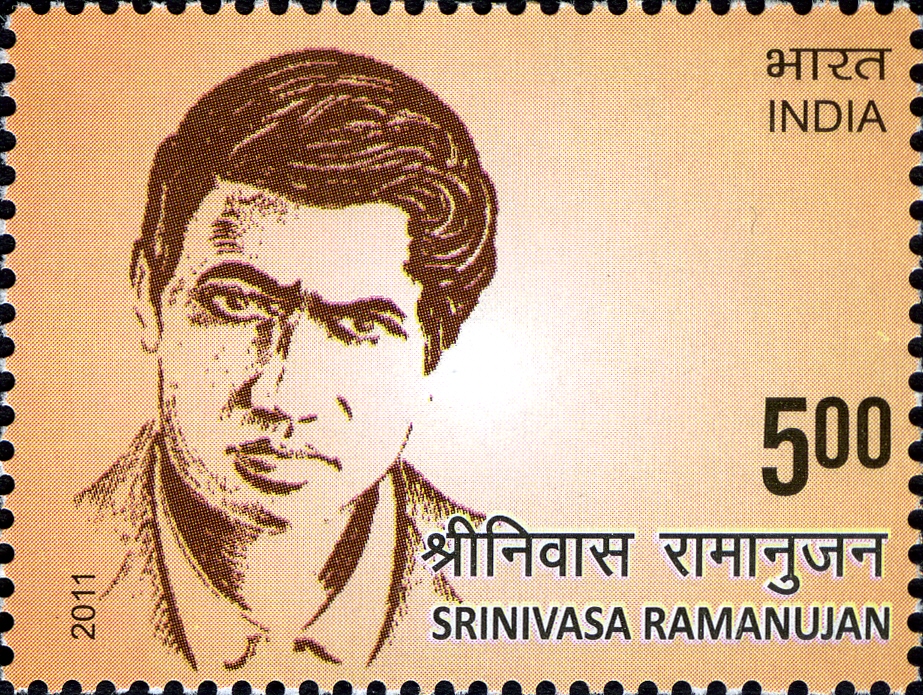
During the 19th century, when many people found mathematics to be an impenetrable field, one Indian mathematician viewed mathematics as the breath of his life. Without it, he could not have lived. Eventually, he became synonymous with mathematics itself. This person was Srinivasa Ramanujan (born on December 22, 1887, in Erode; died on April 26, 1920, in Kumbakonam). For Ramanujan, mathematics was everything. Even in his dreams, he saw numbers! He was one of the very few geniuses in the world in the 19th-20th century. His memory is honored with the celebration of National Mathematics Day on December 22.
Ramanujan’s Life and Contributions
Ramanujan, who hailed from Kumbakonam in Tamil Nadu, was deeply influenced by the book “Synopsis of Elementary Results in Pure and Applied Mathematics” by George Shoobridge Carr when he was just 15 years old. Ramanujan went on to formulate his own theorems and formulas, advancing far beyond Carr’s thoughts. In 1909, he got married, but his family was poor, and he had no steady job. One day, he met Rama Chandra Rao, a government official, who appreciated Ramanujan’s work in mathematics and encouraged him. Soon after, Ramanujan moved to Madras and worked as a clerk.
In 1911, Ramanujan’s papers were published in the Indian Journal of Mathematics, which introduced him to the world of academia. In 1913, British mathematician G.H. Hardy began a correspondence with him, which eventually led to Ramanujan being invited to Cambridge University in England. In 1914, he moved to England and became a student of Hardy.
Ramanujan made significant contributions in number theory and analytic functions, developing the Ramanujan series, elliptical integrals, large series in geometry, zeta functions, and many of his own distinct series. In number theory, Ramanujan earned the title of being one of the greatest minds of all time. His research papers were published in journals in England and Europe. In 1918, he became the first Indian to be elected as a Fellow of the Royal Society in London.
However, in 1917, Ramanujan fell ill. In 1919, he returned to India, but his health continued to deteriorate, and he passed away in 1920 at the young age of 32.
The Legacy of Ramanujan
The famous biography of Ramanujan, written by Robert Kanigel, is titled “The Man Who Knew Infinity”, which aptly describes his understanding of the infinite. That single phrase sums up Ramanujan’s life.
Author