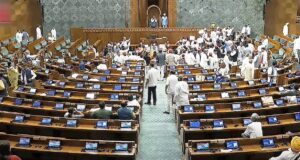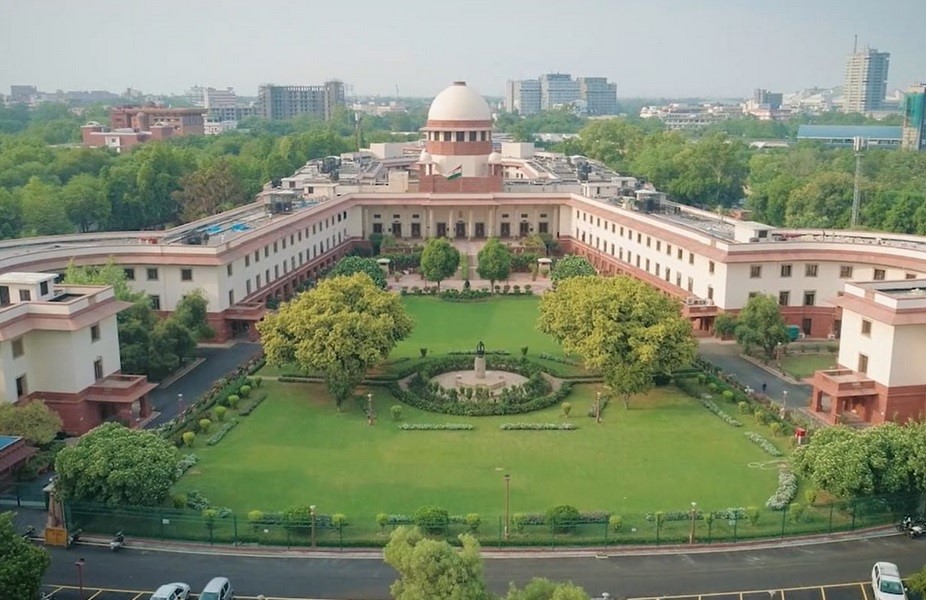
It is well known that woke-left extremists have been arguing that “by denying recognition to centuries-old traditions, collective beliefs, and practices of devout people, women in the 10-50 age group must also be allowed entry into the Shri Ayyappaswamy Temple at Sabarimala.” Now, a 9-judge constitution bench of the Supreme Court is hearing arguments daily on the Sabarimala issue, as well as on the extent of the limitations of courts and laws regarding religious matters. Observing the remarks made by some judges during the arguments gives indications that the court is beginning to realize its limitations in sensitive religious matters. It remains to be seen to what extent the oral opinions expressed by the judges during the hearings will reflect in the official verdict.
In the West, it is an old tactic for ‘woke-liberal’ arguers to achieve their agendas through ‘convenient’ courts. When the situation is favorable to them, their argument is, “Supreme court is Supreme!” Endless publicity is given to the argument that: “Democracy means a powerful court, and the court’s word is final; there is no subject the court cannot understand; the judges’ opinion is universally acceptable; they can pass judgment on any matter, including God and dharma; the constitution we have created is the foundation for all affairs on Earth.” However, if the situation is not favorable to them, then “critical” analyses against the judges begin to emerge.
One must always consistently maintain clarity: “You should not give any verdict regarding religious traditions. You may only consider the secular, worldly atrocities committed by some in the name of traditions (for example, conversion, violence, abuse, insult, public boycott, public untouchability, etc.). The remaining religious and spiritual matters do not fall under the jurisdiction of your authority.”
This is not the correct approach. Whether the judges rule in favor of dharma or otherwise, one must maintain a stable, consistent stance that says: “You are not experts in this subject; in matters of religious traditions, the court must understand its limitations and act with unique responsibility.” So far, devout people have not shown such a firm stance. When the court rules in favor of their tradition, most argue that “the court has supreme authority to pass judgment on traditional matters,” but if it rules against them, they argue that “the court must know its limits in religious matters!”
The foolishness of approaching the court even for “what kind of namam (religious mark) should be applied to a temple elephant’s forehead” still exists in our country. Another example is the opinion of a judge that “Hinduism is a way of life.” Relying on just that, one can still see many Hindu ‘intellectuals’ dancing with joy here and there. Why doesn’t the fundamental awareness or the fundamental question—of how appropriate it is for a court to decide “What is Hinduism”—trouble such people? Why praise the court when it suits you and criticize it otherwise? Is there any difference between the convenient stance that woke-liberals hold regarding the court and the stance held by the so-called ‘devout’?
One must always consistently maintain clarity: “You should not give any verdict regarding religious traditions. You may only consider the secular, worldly atrocities committed by some in the name of traditions (for example, conversion, violence, abuse, insult, public boycott, public untouchability, etc.). The remaining religious and spiritual matters do not fall under the jurisdiction of your authority.”
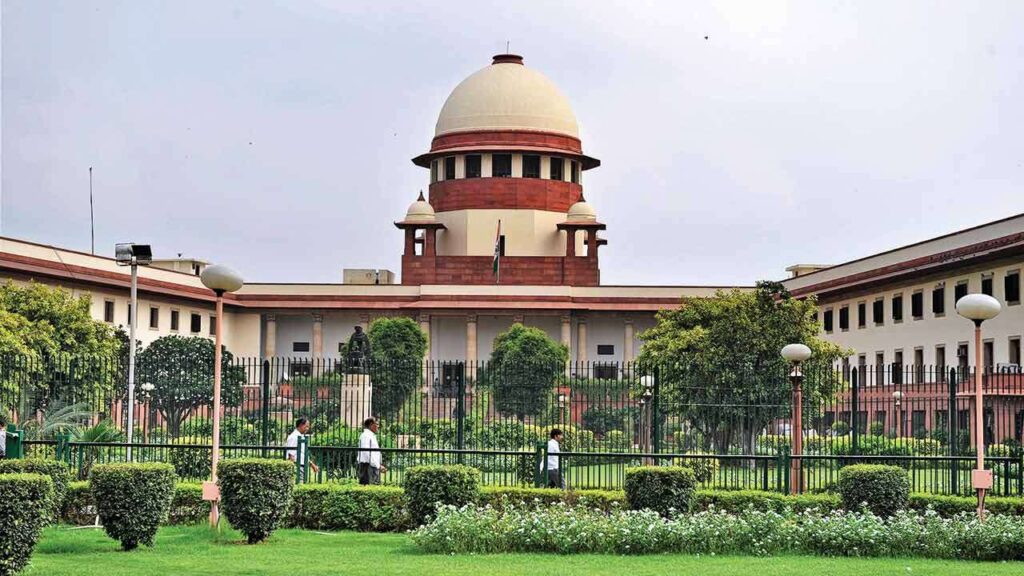
Up to what point can the judiciary and the administrative system direct and control matters of God, dharma, and practices? After what point should it exercise self-restraint and recognize its limits? These are ‘sensitive’ questions that have been debated for decades and remain unanswered. At the same time, it is also true that remedies have been found through the judiciary when people’s dignity of life was affected or when genuine discrimination occurred in the name of communities or religious texts. It is welcome that many such arguments are now being presented before the 9-member bench of the Supreme Court. It is also welcome that some judges have expressed an intent to think honestly and openly about the awareness of limitations the court should have regarding religious practices and beliefs.
Can the concept of ‘consumer rights’ available to people going to movie theaters be applied to devotees going to temples? If it can be so applied, then the temple would have to be called a ‘service provider’, and the devotees would have to be called ‘customers’! God would have to be called ‘a product’ (commodity)!
Justice Indu Malhotra, who wrote the dissenting judgment regarding the non-entry of women aged 10-50 into the Sabarimala Ayyappa Temple, raised many such questions and recorded her observations in the verdict. According to her:
“It is not the court’s job to decide which religious practices should be retained and which should be banned. Courts should generally not interfere in matters of religious sentiments. The Sabarimala Temple and the deity’s idol are protected under Article 25 of the Constitution. It is not correct to interpret religious practices by applying Article 14… It is not proper to apply rationality to religious matters. It is for the respective communities to decide what constitutes their religious practices and what does not, not the courts. India is a country of diversity. Constitutional morality permits everyone to practice according to their own religious beliefs.”
Today, across the world, the term ‘gender discrimination’ has become a powerful ‘feminist’ weapon. The moment it is deployed, an anxious male population is triggered into giving a hyper-cautious response. It is noteworthy here that Justice Indu Malhotra, despite being a female judge, did not bow down to that and rejected the ‘gender’ argument in the Sabarimala case.
Similarly, how do we critique ‘religion’, the dominance of different religions, and tactical moves or stances? Is the solution to say, “From now on, no one should criticize any religion so that no one’s feelings are hurt”? That is also incorrect. No criticism, review, analysis, or intellectual scrutiny can take place in the world without hurting someone’s feelings or affecting someone’s ‘sensitivity’. This is a major challenge that is common to all communities.
An effort to somehow put an end to discussions surrounding religious dimensions was started at a global level by the ‘OIC’ (Organization of Islamic Cooperation) in 1999. The 56 OIC countries clamored together. Resolutions were tabled with the voice that: “Defamation and denigration of religions are intensifying in the world. It must be stopped. An international ban should be imposed on this. Pressure must be put on UN member states to create laws regarding this.” Along with the 56 countries of the OIC, countries like Communist China, Cuba, Russia, Singapore, Thailand, Nicaragua, Venezuela, and South Africa voted in favor of the resolution. However, it did not come into effect. Later, the OIC took a new path. As a result of its continuous efforts, in 2011, the UN Human Rights Council adopted a new resolution ‘against intolerance’ stating that ‘religious communities cannot be depicted negatively’ (Resolution 16/18).
Later, as the influence of ‘wokeism’ grew dense in America, the argument of ‘Islamophobia’ came to the forefront. It is a concept aimed at controlling and suppressing opinions about the Islamic religion that are disliked by its followers. The process of implementing it like a law in many states of America became a subject of intense debate and criticism.
In this context, separating reasoned criticism from baseless defamation is a very difficult task. Critiquing an individual based on available evidence, questioning the behavior of a group, criticizing an entire community, or intentionally portraying it negatively—identifying the subtle differences that may exist among all of these is no ordinary task.
Some people deliberately make the argument that ‘the constitution is the basis for everything’ triumph whenever it suits them. The constitution is not a self-manifested deity (udbhavamoorthi). It is a code of governance that people have created and accepted for themselves. According to the constitution itself, it is a book of rules for the governance of the country given by the Indian people (We, the people of…) to themselves. The constitution exists for the people. The argument that people exist for the constitution holds no weight. This is precisely why there is a provision to amend it. Through the Constitution of India, the Indian people have given themselves religious freedom and the right to practice. They have the right to practice it as long as it does not cause harm to others.
People are the creators of the constitution. The court is a creation of the constitution. The argument that people are a creation of the constitution is meaningless. What kind of amendments might take place over a period of a thousand years? As long as the current constitution is in force, the Supreme Court holds the supreme authority to interpret it. The responsibility to protect it without harming the core ideals of the constitution also belongs to it. This is the practice commonly followed in almost all democratic countries, including India. However, how appropriate it is to view and interpret everything in life, including the existence of God—which cannot be proven in a court—solely from the perspective of the constitution, is a question that needs reflection.
In the context of Sabarimala, the question comes to the forefront: “How correct is it to apply a book-based monotheistic perspective (mono-theism) to Indian traditions that worship and revere billions of different forms of Gods and Goddesses?” Can the concept of ‘consumer rights’ available to people going to movie theaters be applied to devotees going to temples? If it can be so applied, then the temple would have to be called a ‘service provider’, and the devotees would have to be called ‘customers’! God would have to be called ‘a product’ (commodity)! Just as no one can dictate the clothing, behavior, food, purity, or pollution of those going to movie theaters, it would mean that no instructions can be given to devotees going to temples either. Various bizarre arguments could take place due to the interference of courts.
Whose decision is it to determine the perspective through which God and dharma should be viewed? Is it possible for anyone to ‘constitutionally’ prove the existence of God in a court? How would it be if the court passed a judgment saying ‘God does not exist’ simply because ‘it has not been proven in court’? If the court can poke its nose into all matters, there is no telling where this will stop in the future, or what dimensions its consequences will touch.
Author