The Dollar in Trouble
When conducting business globally, the dominance of the American dollar must be maintained – this is America’s policy. To preserve the dollar’s dominance, the country will take any measures necessary, including fighting as many wars as needed. There are those who believe that a secret alliance involving bankers, scientists, financial experts, military officials, and diplomats is systematically working to maintain the dollar’s supremacy. James Rickards, in his book Currency Wars: The Making of the Next Global Crisis, highlights some of these secret operations. He himself participated in this currency war secret organization and knows its strategies firsthand.
The “Bretton Woods sisterhood,” better known as the World Bank and the International Monetary Fund (IMF; established in 1944), maintains American dominance. The United States holds the largest shares and contributions in these organizations. Even in the various sub-organizations of the World Bank group, such as the International Finance Corporation and the International Development Association, America holds significant control. All of these organizations are headquartered in Washington, D.C., and member countries must align with America’s policies to secure loans. For instance, when seeking “assistance” loans from the IMF, countries must implement the “structural adjustments” that America demands.
To escape this control, regional development banks have emerged, but they too are often controlled by certain regional powers. Their shareholding structures are uneven. For example, the European Investment Bank, founded in 1958, has the primary shareholders of Germany, France, the United Kingdom, and Italy. The Asian Development Bank, established in 1966 in Manila, Philippines, is predominantly controlled by Japan.
Amid such conditions, the New Development Bank (formerly known as the BRICS Development Bank) was established. In 2012, BRICS countries (Brazil, Russia, India, China, and South Africa) decided to create the new bank. However, China argued for the largest share in the bank, while India insisted that no country should dominate. South Africa, which could not afford to contribute as much, expressed concerns. In the end, at the 6th BRICS summit in 2015 in Brazil, all countries reached an agreement. Indian Prime Minister Narendra Modi’s diplomacy played a key role in this success. The New Development Bank Treaty was signed, seen as a major milestone in reducing America’s dominance.
India and China, the world’s two largest countries (in terms of population and economic power), if they work together, will create ripples in global geopolitics. But China’s actions are as unpredictable as America’s. Despite this, BRICS has made significant progress in breaking the dollar’s dominance.
After the success of the BRICS Bank, there were calls for a “BRICS Currency,” but due to opposition from China and America’s strong resistance, this hasn’t materialized. Now, the Reserve Bank of India (RBI) is considering creating an online payment system.
The Resurgence of Gold
Currently, the Russia-Ukraine war has accelerated many global changes. The world is now moving from an over-reliance on the U.S. dollar to a renewed focus on gold. Many national currencies are now being used for international trade.
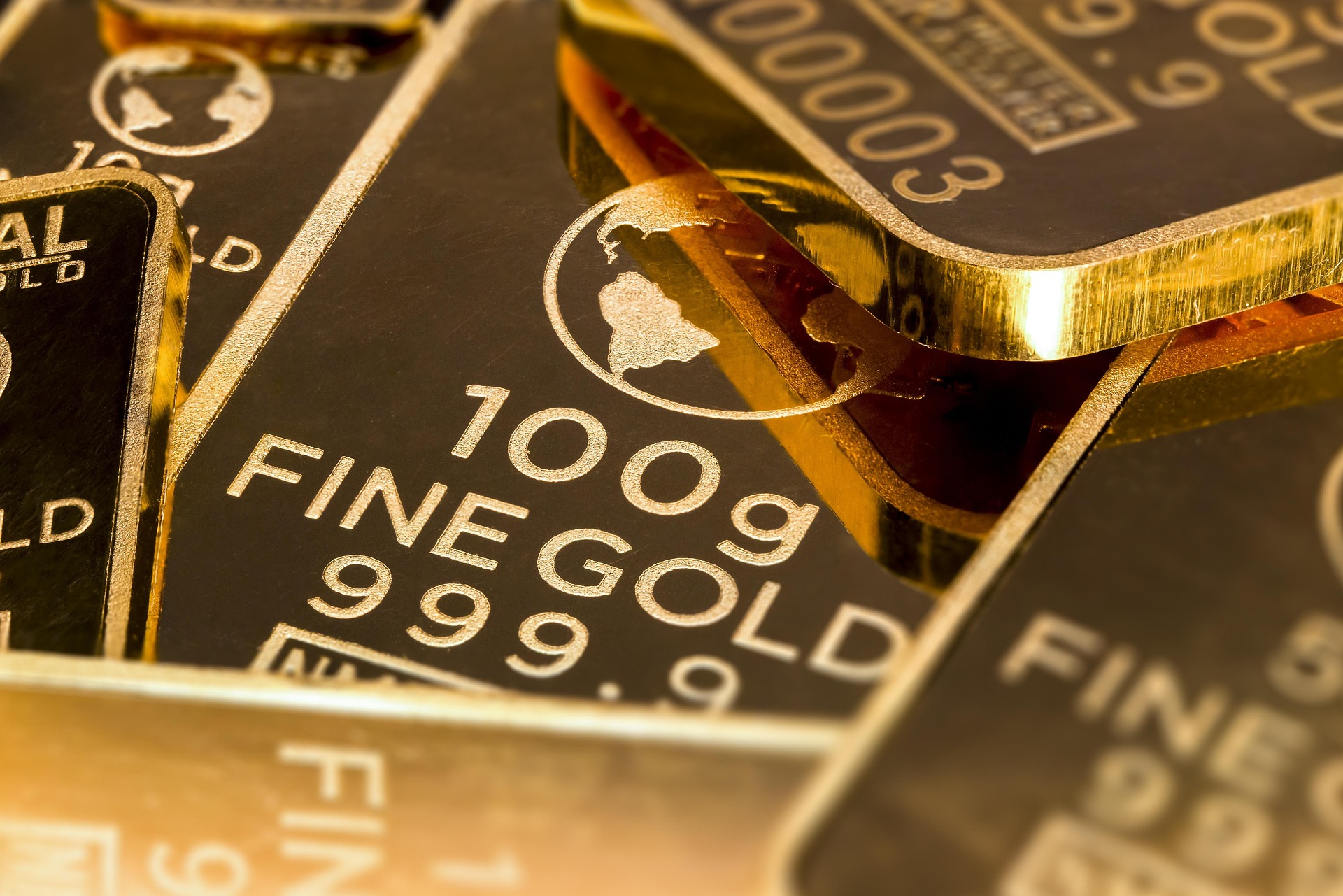
The political strategy of the U.S. to print as many dollar bills as it desires and dominate other countries by creating economic bottlenecks is facing stronger global opposition. The notion that paper money, like the U.S. dollar, is the true value of wealth is gradually being debunked. As the dollar loses its international significance, there is a growing understanding that “gold is the real wealth” and “gold is the true global currency, not the dollar.”
All major global powers are purchasing gold at a rapid pace. There is a growing belief that “the more gold we have in our vaults, the safer our future will be.”
Two key developments are taking place rapidly: using local currencies for international transactions to reduce dependence on the dollar, and buying gold to strengthen local currencies. As these trends continue, the U.S. dollar is losing its dominance, importance, and necessity. Saudi Arabia has abandoned the “petrodollar” policy and is now moving away from trading oil solely in dollars. China, which has already made plans, is purchasing large quantities of gold.
Gold is Life
While the American dollar has not yet collapsed, its global influence is undoubtedly waning. Over the years, its reliability as the dominant currency in international trade has diminished. The influence it once had under the “petrodollar” system has significantly decreased. For the past 50 years, Saudi Arabia has not renewed its dollar-dependent agreements. Now, China’s yuan and India’s rupee are being used in international oil transactions. Efforts are underway to create a unified digital payment system for trade between BRICS nations. This will end the monopoly of the dollar in the global financial payment system.
Donald Trump’s antics and the U.S.’s policies have accelerated the “de-dollarization” process. Europe is now seeking its own path. Historically, gold and silver have been considered “real money” for thousands of years, and now they are returning to the forefront.
During the Russia-Ukraine war, Western countries targeted Russia’s dollar reserves, gold, and other assets. They also excluded Russia from the SWIFT system. These actions have opened the eyes of many countries. The reality that “if our gold is under our control, only then are we safe” has become clear. India has understood this as well. Quietly, the Reserve Bank of India (RBI) has been bringing back gold stored abroad. In 2024, 100 tons of gold were repatriated in May, and another 102 tons in October. By September 2025, a total of 274 tons of gold were secretly and safely brought back to India.
India now holds more than 880 tons of “official gold” in total, with about 576 tons already secured domestically. Around 290 tons remain abroad, with the Bank of England and the Bank for International Settlements (BIS) holding them. This means that 33% of India’s official gold is still to be repatriated.
Now, all nations have come to realize that “gold is the true money,” not the cheap paper currency of the U.S. The rising price of gold is a reflection of this shift in mindset.
American Reserves
Gold has held a significant position in human civilization from ancient times. This unique mineral, which can be found deep underground, has been invaluable across all cultures, whether as adornment, for creating artifacts, or as the basis of national economic power. However, there is a limit to how much gold can be extracted from the Earth, and the total amount of gold available is finite. The question remains: how much gold is there in the world? Can we extract all of it? These questions have long been a topic of debate for scientists, and a definitive answer has yet to be found.
According to Australian researcher Professor Bernard Wood, 99% of the world’s gold is located in the Earth’s core, thousands of kilometers beneath the surface. The possibility of extracting this gold is virtually non-existent. But how much gold is available above the Earth’s surface for extraction? The estimates are staggering. According to Professor Wood, if we could extract all the gold from the Earth’s core, it could be spread out across the entire surface of the Earth in a layer that is only half a meter thick! However, let’s focus on the gold that has already been extracted or can be extracted. There are large reserves of gold in various countries, and gold has been mined for thousands of years. Households often have jewelry, coins, and other forms of gold, and governments also store gold as part of their economic strength.
Governments tend to keep their gold reserves, viewing them as a form of long-term wealth storage. While many countries strive to increase their gold reserves, it is rare for them to dispose of their gold reserves unless absolutely necessary. As of now, estimates suggest that humanity has extracted around 145,000 metric tons of gold throughout history (using the old British ton, 1 long ton equals 1,016 kg; in North America, a ton is 907 kg). Central banks and authorized institutions worldwide hold about 20% of this gold.
Where Is All This Gold Stored?
Gold is stored securely in a variety of ways across different countries. The United States, for example, stores most of its gold in two key locations: the Federal Reserve Bank in New York and the Fort Knox military base in Kentucky. Reports suggest that the Federal Reserve holds around 5,000 metric tons of gold, and additional foreign gold reserves are stored there on behalf of other countries. Fort Knox, another secure storage facility, reportedly holds around 4,000 to 5,000 metric tons of gold, though the exact amount remains a secret. This topic has been the subject of speculation and even political statements, with figures like Donald Trump and Elon Musk previously hinting at conducting investigations into the gold stored there.
Fort Knox is essentially a vault for gold reserves. It has thick granite walls, a 22-ton heavy door designed to withstand nuclear explosions, and is protected by layers of security, including armed guards, video surveillance, and military personnel. Even entering the facility is highly restricted, requiring a complex set of codes that only a few people have access to, and even then, access is tightly controlled.
Gold Superpower Secrets
As of the end of 2023, according to the World Gold Council, the total amount of “official” gold reserves in the world stands at 36,699 metric tons. The United States holds the largest portion of this, with 8,133.46 metric tons of gold in its reserves, which is approximately ten times more than India’s official gold reserves. At the current value of gold, the United States’ gold reserves are worth an estimated $1.3 trillion.
Following the U.S. are Germany, with 3,352.65 metric tons of gold, and Italy, with 2,451.84 metric tons. France holds 2,496.57 metric tons, and Russia possesses 2,332.74 metric tons. China, the largest purchaser of gold, has accumulated over 2,300 metric tons. Other countries with significant reserves include Switzerland, Japan, and India, which holds 880 metric tons.
Given the sheer amount of gold it possesses, the U.S. could be considered the “gold superpower.” However, there is a major flaw in this calculation. Although the U.S. government holds vast amounts of gold, its citizens don’t own much gold at all. In contrast, in India, the population collectively holds far more gold, particularly in the form of jewelry, which continues to be deeply embedded in the culture.
India: The Real Gold Superpower
India has long been the land of immense wealth and gold reserves, which can be traced back to its rich cultural and historical heritage. Despite the fact that India does not have significant gold reserves in its central bank compared to the U.S., the gold that is privately owned within the country is vast—estimated to be between 24,000 and 40,000 metric tons. This gold is found in the homes of millions of Indians, predominantly in the form of jewelry.
Unlike the centralized reserves in the West, where gold is largely stored in banks, India’s wealth lies with its people. The practice of owning gold has been a part of Indian culture for centuries. The gold jewelry worn by Indian women, for example, is seen as a form of financial security. Even poorer households may possess some gold in the form of a mangalsutra (a wedding necklace) or other forms of jewelry, which signifies their social security.
Historically, India was the world’s richest country, with gold playing a central role in its economy. In fact, India led the global GDP rankings until the 18th or 19th century. However, much of this wealth was looted during centuries of Muslim invasions and European colonialism. Although the extent of the looted gold remains unknown, much of it was likely taken overseas. The British East India Company played a key role in depleting India’s wealth, and even after independence, much of India’s gold wealth remained hidden or lost.
The Hidden Gold Reserves of India
The amount of gold still stored in India is extraordinary. Estimates suggest that India’s private gold wealth exceeds the total gold reserves of the top 10 central banks in the world combined. This wealth is deeply embedded in Indian culture and society, and it plays an important role in the financial security of families. Traditional customs such as marriage rituals, which often involve the exchange of gold, further solidify gold’s role in India’s economy.
Global Power Struggles Over India’s Gold
Given the massive amount of gold stored in Indian households, there is increasing global interest in accessing this wealth. Some experts suggest that there are forces at play trying to discover how much gold is hidden in Indian homes. Global “deep state” conspiracies aim to manipulate people into exchanging their gold for investments, or to find ways to funnel it out of the country.
India’s gold holdings are not just a matter of national pride; they are a crucial part of the country’s economic stability. The long-standing tradition of valuing gold as a form of wealth is a safeguard against financial instability. It represents a kind of decentralization of wealth that is rare in the modern world. Unlike the centralized monetary systems in the West, where governments hold the majority of the wealth, India’s wealth is far more distributed across the population, providing a unique form of economic resilience.
The Dance of Currency
Money, in any form, is the most valuable commodity in the world. Historically, money has taken on various forms, from cattle and precious metals to coins, paper notes, and now digital currencies. The evolution of money and its different forms tells a fascinating story of how human society has adapted to the changing needs of commerce and trade.
In the ancient kingdom of Lydia (modern-day Turkey), coinage was first developed, with coins made from gold and silver. These early coins date back to around 687–652 BCE. Today, the United States mints the most coins, with the U.S. Mint producing around 2.8 billion coins annually.
Paper money, as we know it today, originated in China during the 7th century, long before it became widespread in Europe. The first official banknotes were issued in Sweden in 1548, followed by England in 1695 and the United States in 1690. In India, paper money was introduced between 1773 and 1775.
Credit cards, which allow consumers to purchase goods on credit and pay later, were introduced in the 1950s. The first credit card was issued by Diners Club in 1950, and this concept has since expanded globally. Similarly, the first ATM machine was launched in London in 1967, revolutionizing the way people accessed their money.
Cryptocurrency, such as Bitcoin, represents a modern form of decentralized digital money. First introduced in 2008, Bitcoin is now a widely used currency for online transactions and investments. Other cryptocurrencies have since emerged, but Bitcoin remains the most well-known.
As technology advances, the concept of a “cashless economy” has gained traction. In this system, physical cash is replaced by electronic and digital payments. While the world moves closer to this reality, cash is unlikely to disappear entirely anytime soon. However, we are increasingly moving towards a “less-cash economy,” as evidenced by the rise of digital payments in countries like India.
The role of money, particularly gold, continues to evolve in the global economy. While digital currencies and electronic payments are becoming more common, gold remains a key asset for countries and individuals alike. In India, gold is not just a form of wealth but a cultural cornerstone that continues to provide economic stability for millions of people. As the world moves towards a more digital and cashless future, the role of traditional wealth, particularly gold, may take on even greater significance.
Sure, here is the translation of the section you provided:
Bitcoin Rituals
The ‘self-proclaimed’ founder of the Bitcoin system, the creator, is named Satoshi Nakamoto. It sounds like a Japanese name. However, in reality, there is no one who has seen this person! No one knows the true identity or address of this person. It’s unclear whether the name is real or a pseudonym. Some even suggest that the name might be a fictional combination of the first letters of companies like Samsung, Toshiba, Nakamichi, and Motorola.
The Bitcoin enthusiasts argue, “This person does not wish to reveal his true identity. He has every right to remain private, invisible, and anonymous” (whether it is a man or a woman, one person or many, is unknown).
In December 2012, Newsweek, a prominent American magazine, stopped its print edition and began publishing only a digital version. In March 2014, the print edition resumed, and at that time, it made a sensational claim that startled the world — it claimed to have found the founder of Bitcoin in just two months! They reported that a 64-year-old Japanese-American named Dorian Nakamoto, living in Southern California, was the mysterious figure behind Bitcoin, and published his address along with a “secret email interview”! However, this claim did not gain widespread credibility. Other media outlets following up on the story quickly dismissed it, calling it a “baseless hoax.”
“Bitcoin is a currency with no physical form, used over the internet, free from any government’s control. It creates and determines its own market value based on demand and supply, much like stock shares. It is an invention that is unique to human civilization. A great revolutionary form of money,” say its users and promoters. Bitcoin usage and transactions are quite easy. With just a click of a mouse, you can transfer your Bitcoins secretly and quickly to someone else. To store your Bitcoins, you use a “Bitcoin wallet” (similar to your email inbox). It has two digital keys: one is a public key, and the other is a private key. (A “key” here refers to an alphanumeric code of about 24 to 36 characters). You can share your public key with others. However, your private key should remain known only to you. Anyone who knows your public key can send Bitcoins to you using their private key, and you can send Bitcoins to others using their public key. To receive Bitcoins sent to you, you will need to use your private key. All these transactions can be managed directly and privately by you, without the need for banks, financial institutions, or intermediaries. As long as your private key remains unknown to others and is not hacked, your Bitcoin store is safe. But if your private key is exposed to others, it is no longer yours!
Bitcoin’s use is smooth, but its management is complicated. There are no official “regulatory” systems controlling its value or transactions. When compared to the way the US government manages the US dollar to maintain its global reserve status, Bitcoin, with its lack of official regulation, appears to be an appealing, revolutionary financial system. But when you look at it from the perspective of who controls it, it is shrouded in mystery and darkness!
Since 2008, various intelligence agencies have kept an eye on Bitcoin transactions, but the skill of its programmers is so high that no one has been able to hack their system yet.
The year 2008 is significant. It was the year that “Dark Web” — a hidden internet network for criminals — became prominent, and the Tor Browser that leads to the Dark Web also emerged. Alongside this, Bitcoin and blockchain technology started to gain traction. How did all of these technologies emerge in the same year?
Bitcoin solved the problem of how criminals on the Dark Web (involved in drugs, terrorism, pornography, and other crimes) could exchange money! Bitcoin’s storage and transfer system was resolved through blockchain technology. Did these technologies appear coincidentally in 2008-09, or was there a single force behind their development? (Remember — the US Department of Defense developed the Dark Web, Tor browser, and other secretive technologies!).
The Last Weapon of the Chaotic Demon: Crypto
Today, there are many cryptocurrencies in circulation via the internet. Among them, Bitcoin is the most well-known. Its second version is called Altcoin. Similarly, there are thousands of other cryptocurrencies, such as Ethereum, Dogecoin, Litecoin, Cardano, Bitcoin Cash, and Monero. Some even consider human and dog photos as cryptocurrencies. The Trump family has created cryptocurrencies featuring photos of Donald Trump and his wife, Melania Trump. This is the result of a crazy idea where “anyone can create ‘money’ and release it into the market.”
The Trump family, which has plans to amass immense wealth and cause global disturbances through cryptocurrencies, is now deeply involved in the crypto business. The Trump family’s Waldorf Liberty Financial has partnered with Pakistan’s F.M.A. Asim Munir. There are attempts to make Pakistan a major cryptocurrency hub right next to India.
Cryptocurrencies are like two-edged swords. On one side, there is the attraction of open-source software. On the other side, there are issues with its management. If there is no honest and competent system for managing it, severe consequences are certain. There are powerful forces behind the scenes that can manipulate the system as they wish. Since no one knows who is paying whom, it has become a highly secretive system through which black money flows. Reports indicate that drug deals, terrorism funding, and illegal arms trading are happening through this system. Moreover, Bitcoin’s value experiences extreme volatility in ways that even stock markets can’t predict. Over the past 10-12 years, its value has risen by several orders of magnitude. Those who bought Bitcoin for just ten dollars in 2009 are now multi-millionaires. Such volatility is neither normal nor healthy.
It has been reported that most Bitcoin transactions are controlled by three countries: China, North Korea, and Iran. Along with Russia and Venezuela, these countries are emerging as key cryptocurrency players. What happens if any country controls a “massive crypto network”? That country can do anything without the fear of international financial sanctions. For example, these countries could engage in the trade of nuclear weapons and missile technology without worrying about sanctions. If they possess the crypto power, they will say, “Who cares about your sanctions? As long as we have crypto strength, we can conduct business the way we want!” Their arrogance will reach new heights. The United Nations will have no sway over them. No one will care about security councils. This could undermine the entire “UN” global system. The decentralized nature of money could lead to the collapse of global systems one by one. International financial institutions like the World Bank and national banks could fall apart. What will happen if new underground alliances form in place of the current global systems that have prevented world wars since 1945?
If people are shown the prospect of becoming billionaires overnight by investing in crypto, they will hold onto their cryptocurrencies tightly. When people’s madness and obsession with money reach fever pitch, governments will be helpless. They will find themselves in a position where they cannot make decisions contrary to public opinion. If crypto addiction surpasses limits, it could lead to a global crypto crisis. This is already happening. The country of El Salvador has even created a “Bitcoin tax haven.” The world’s major financial systems are on the brink of collapse.
Even though there are compelling arguments in favor of cryptocurrencies, they will eventually prove to be a threat to global peace. Blockchain technology can be used safely in non-risk areas, like government-approved digital currencies, but not in such a chaotic system.
Crypto mining requires mathematical knowledge, computer skills, proper connections with crypto networks, and a high-end computer network. The heat generated by this process can burn up microprocessors and graphics cards. The electrical connections may even be destroyed. To avoid this, heavy cooling systems are needed. Even with large computer networks, mining a single coin can take a long time. The electricity used for mining exceeds general understanding, and ordinary users can’t “mine” with their electric meters. Large mining operations, which require hundreds of computer chips, cost millions to set up. This process also harms the environment.
Nonetheless, mining operations are active in many countries. China has been heavily involved in crypto mining, and the recent decline in Bitcoin’s value is partly due to China’s complete ban on it. However, “mining” operations are still continuing secretly. There are suspicions that the Chinese government may be using these operations to manipulate the financial situation of other countries. Pakistan, in collaboration with Trump, dreams of becoming a major crypto hub as well. Pakistan’s ISI network, dealing with drug trades and terrorism, could gain further strength through crypto.
The excessive growth of cryptocurrency “Darknet” might lead to financial, technical, and direct global warfare between nations. Drugs, terrorism, black money, crypto, artificial intelligence, and tech company dominance are all factors that could bring about dangerous consequences by 2030.
The Power of Swarna Lakshmi
In the last century, Western financial systems, including “gold control” policies, led to the nationalization of gold. They took people’s gold and established ways for only the government and corporate investments to handle it. In India, the government once urged people not to buy gold ornaments, claiming that purchasing gold from foreign imports would hurt the “precious foreign exchange.”
After such ideologies were established in many countries, the push to eliminate “golden culture” and promote a “culture of nakedness” began, with countries promoting nudity over ornamentation. However, the Indian people, especially Indian women, never gave in to such ideas. By celebrating festivals like Akshaya Tritiya and others, they unknowingly continued to buy more and more gold, preparing India for a new era of “de-dollarization.”
Even today, India holds a significant position among the world’s largest gold consumers. When the price of gold is low, the people do not buy it. However, when the price increases, they purchase even more. Attempts by foreign powers to impose restrictions through government controls to stop this have largely failed. The Indian fascination with gold is so strong that it can change the trajectory of government policies.
At one time, gold was India’s currency. Business was conducted through gold coins, and in a literal sense, it could be called the “Golden Age.” Even today, India’s gold power is unparalleled. More than 40% of India’s GDP is represented by the total value of gold held in homes across the country.
Despite this, our government’s policies have failed in strengthening the country economically through the power of gold. Every government has forgotten the duty of protecting our vulnerable gold culture with strong gold policies. But no matter the government, the people’s culture continues to protect our country.
In a world where the American dollar is gradually losing its importance, the strength of India’s golden culture has become a remarkable force. It is speculated that India’s total gold holdings could be around 40,000 tons. Regardless of any challenges, India now possesses about 20% of the world’s gold.
As long as foreign countries continue to sell gold to us, there is no harm in purchasing it. Even if the dollar loses value, there is no reason to worry!
Author